Robert D. Ray
Asian Garden
A Garden Created to Show Appreciation for Contributions made by Asian Americans in Iowa
One-of-a-Kind Free Garden
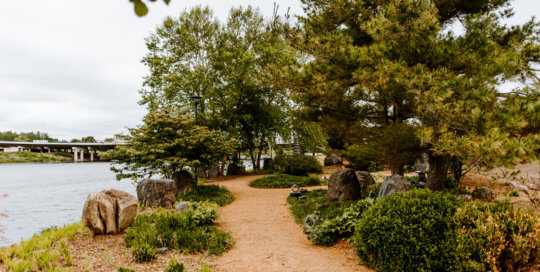
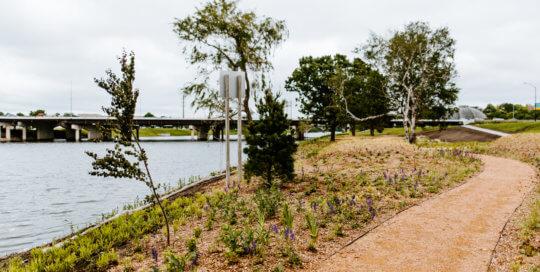
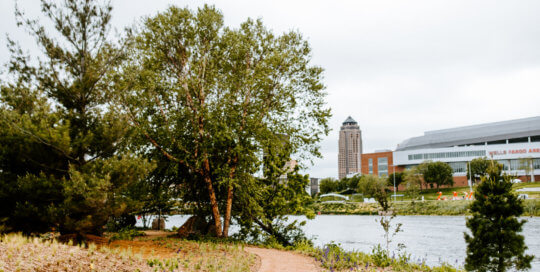
The Robert D. Ray Asian Garden sits on more than two acres along the Des Moines River in downtown Des Moines. The garden is a symbol of diversity and appreciation for the contributions of Asian Americans in Iowa. Because of this, it’s a one-of-a-kind garden made to welcome to all who visit.
Make it Part of Your Visit
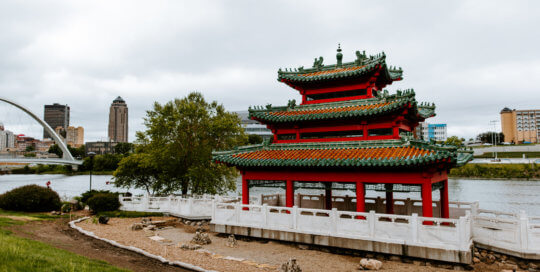
See the garden as part of a trip to downtown Des Moines, or as part of your visit to the Greater Des Moines Botanical Garden. It features Asian sculptures, architecture, and beautiful landscaping.
The Passsage of Time
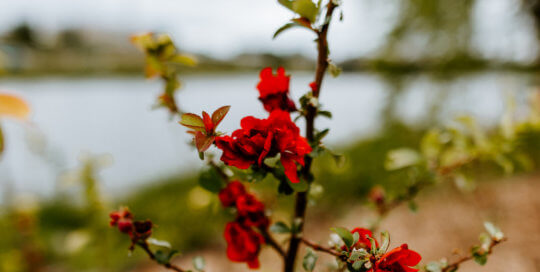
The Robert D. Ray Asian Garden plantings reflect and highlight the subtlety of the passage of time. It also was designed to slow folks down providing an opportunity for contemplation. This garden is meant to highlight the seasons. In addition, the garden engage you within the urban setting we live in, plus celebrates the river that is a sustainer and home to multitudes.
Gateway for Diversity
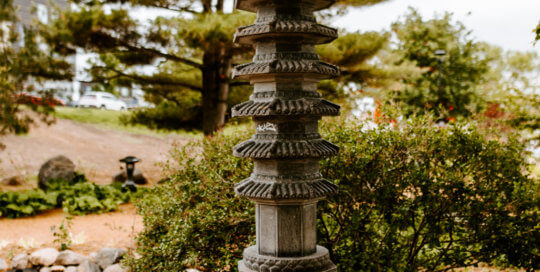
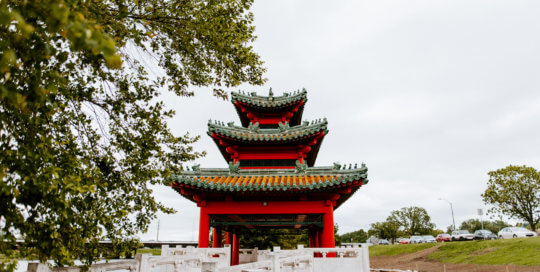
At the South entrance to the garden, pass through the Gateway for Diversity and come to the Diversity Circle. Next, you’ll cross the Bridge for Prosperity as you enter the iconic 37-foot-tall Chinese pavilion.
Bridge for Friendship
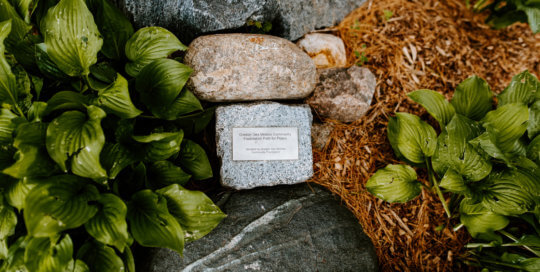
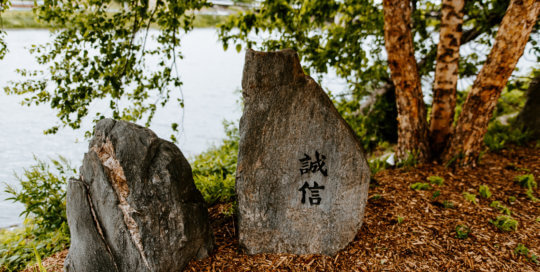
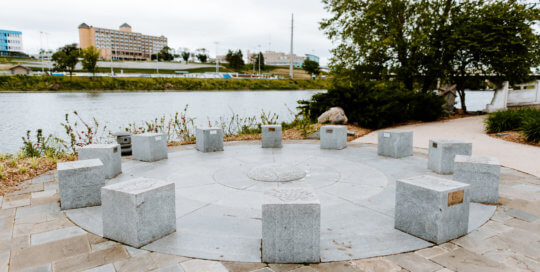
When you exit the pavilion’s North side, you’ll cross the Bridge for Friendship. As you follow the Path for Harmony you will enter into the Character Garden. Within the Character Garden, six granite boulders form a circle. Each boulder is inscribed with Chinese characters . They symbolize the morals of trustworthiness, caring, respect, fairness, citizenship, and responsibility.
The Mounds
As guests emerge on the North side, they are met with three mounded earthen berms covered in sedges and forbs. These Drumlins reflect landforms shaped by retreating glaciers. They also suggest a rolling landscape echoeing regional Iowa topography.
Botanical Collection of Unique Plantings
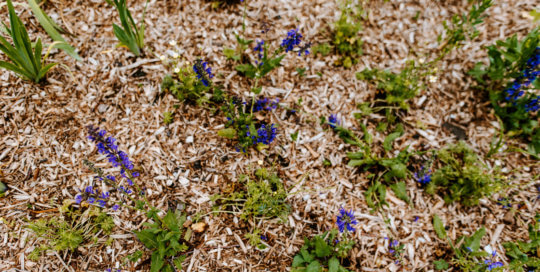
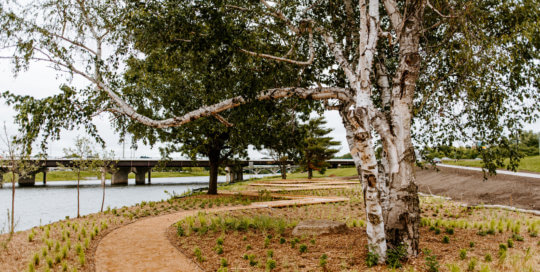
A zig-zag boardwalk weaves through a planting area designed with the oxbow wetland areas in mind. These wetlands are found in Iowa and throughout the region. The plants throughout the entire garden were chosen knowing the area is susceptible to seasonal heavy rain and occasional flooding. Finally, we continue to tweak and adjust plantings as we adapt to an ever-changing climate.
The Gallery



Please Support Your Botanical Garden
Become a Member
Donate Today
Asian Communities
Fleeing Laos in the late 1970s
Since escape meant fleeing bombs, chaos, and terrible uncertainty. As a result, Laos was a dangerous place. All because communists controlled the region, dictating to Laotian citizens precisely what they could or could not do.
The first Laotian refugees reaching Iowa came in Nov 1981.
There were over 100 families. Today there are over 2,000 Lao families in Iowa. Iowa meant safety, education, and good jobs. In addition, it meant dreams could be fulfilled.
The Lao American Association of Iowa was formed to help address issues for Laotians in Iowa. The Lao Natasinh Group teach about the Laotian culture and also perform dances for the community.
The Hmong are an ethnic group that migrated from China to Laos in the18th century.
They settled on the mountaintops of Laos for hundreds of years. In 1947, Laos King Si Sa Vang Vong declared that all Hmong were Lao citizens.
In 1960, the United States CIA recruited the Hmong as allies during the Vietnam War.
One of their many missions was to rescue downed American pilots. During this time, the Hmong established strong relationships that helped pave an opportunity for them to seek refuge in the United States after the war. The result was many Hmong moving to Iowa.
In 1976 the first Hmong refugees arrived in Iowa thanks to Governor Robert D. Ray.
Because the Hmong rely heavily on farming and agriculture, Iowa was a perfect fit. Consequently, hundreds of Hmong still reside in Iowa today.
Tai Dam are an ethnic minority who considered Northwestern Vietnam to be their homeland.
As communism descended on South Vietnam and Laos in the early 70s, the Tai Dam evacuated to Thailand. Overall, they campaigned for sanctuary and asylum. Governor Ray was the only governor willing to help.
Tai Dam were welcomed to Iowa under a refugee resettlement program that lasted 35 years.
The first group of 350 Tai Dam people arrived in Des Moines in 1975. Since then, more Tai Dam live in Iowa than anywhere outside of Asia as of today.
Many Tai Dam feel they never had a place or a land to call home, but now do.
The Tai Village has a welcome center named the Robert D. Ray ‘Tai House,’ where he is seen as the “beloved hero and Ray of Freedom.”
Govenor Robert D. Ray
When Governor Ray watched a “60 Minute” broadcast with Ed Bradley about the plight of the Vietnamese fleeing on boats, he could not bear to see so many people suffering and do nothing about it. The result?
He acted.
After the Fall of Saigon on April 30, 1975, nearly 130,000 Vietnamese were rescued and relocated throughout the U.S. Thousands of Vietnamese were resettled in Iowa. Iowa had established the first and only Bureau of Refugee Services where churches and families worked together to sponsor refugees, providing them support and resources. All in all, Iowa became their new homeland.
Vietnamese are one of the largest Asian American populations.
Nationwide, Vietnamese Americans are the fastest growing Asian American group, currently ranking fourth overall. The Vietnamese in Iowa have become teachers, doctors, lawyers, non-profit leaders, business owners. In addition, they have enlisted in the Armed Forces to serve the country.
A dark era befell Cambodia
When the Khmer Rouge, under the dictator Pol Pot, ruled the country from 1975 to 1979, life was not good for those who lived at that time. Pol Pot’s genocidal regime led to the deaths of nearly 2 million people out of a population of just 7 million.
In October 1979, tens of thousands of Cambodians fled across the border into Thailand.
Governor and Mrs. Ray were on a trip to Thailand and witnessed the terrible suffering of nearly 30,000 starving and emaciated Cambodian refugees. SInce seeing this, concern led Governor Ray to create Iowa SHARES, contributing close to $2 million for food, medicine and volunteer nurses and doctors.
Approximately 225 Cambodian families were resettled in Iowa during the late 1970s and early 80s.
Since that time, significant educational and cultural initiatives were founded:
- The Iowa Asian Alliance (IAA)
- CelebrAsian
- The state’s annual Asian heritage festival
- “A Promise Called Iowa” produced by Iowa Public Television aired
- The Robert D. Ray Asian Garden was built.
All created to preserving Iowa’s humanitarian heritage far into the future.
Know What's Going On!
SIGN UP HERE FOR
Newsletter Emails
"*" indicates required fields
Be the first to find out about events, classes & more