Robert D. Ray
Asian Garden
A Garden Created to Show Appreciation for Contributions made by Asian Americans in Iowa
One-of-a-Kind Free Garden
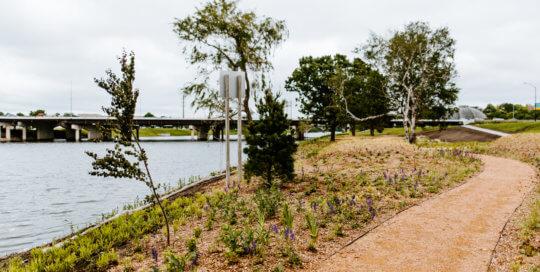
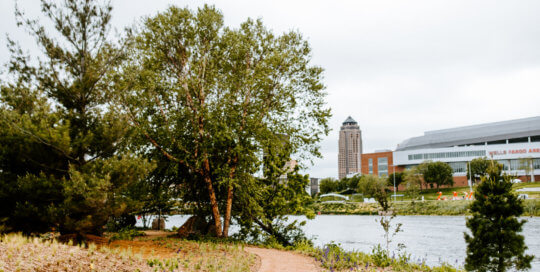
The Robert D. Ray Asian Garden sits on more than two acres along the Des Moines River in downtown Des Moines. The garden is a symbol of diversity and appreciation for the contributions of Asian Americans in Iowa. Because of this, it’s a one-of-a-kind garden made to welcome to all who visit.
Make it Part of Your Visit
See the garden as part of a trip to downtown Des Moines, or as part of your visit to the Greater Des Moines Botanical Garden. It features Asian sculptures, architecture, and beautiful landscaping.
The Passsage of Time
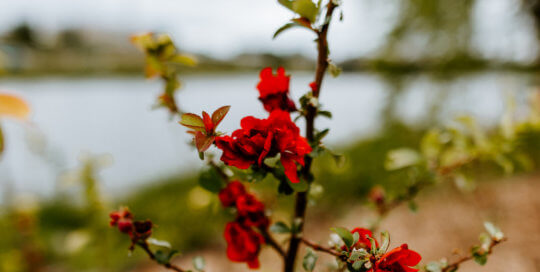
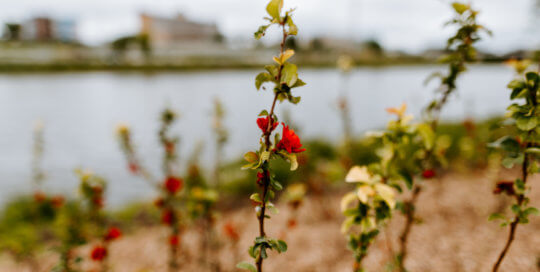
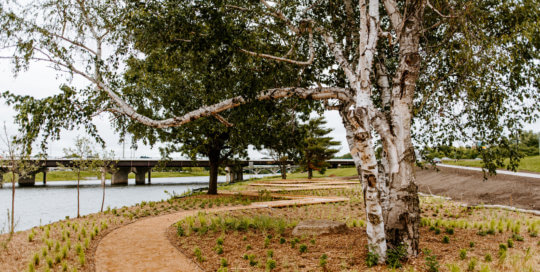
The Robert D. Ray Asian Garden plantings reflect and highlight the subtlety of the passage of time. It also was designed to slow folks down providing an opportunity for contemplation. This garden is meant to highlight the seasons. In addition, the garden engage you within the urban setting we live in, plus celebrates the river that is a sustainer and home to multitudes.
Gateway for Diversity
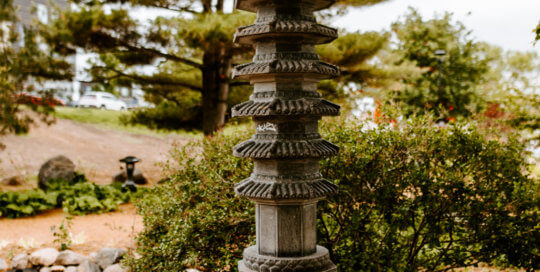
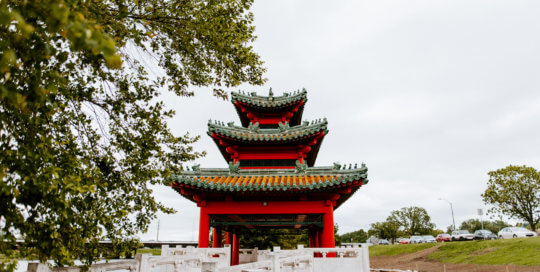
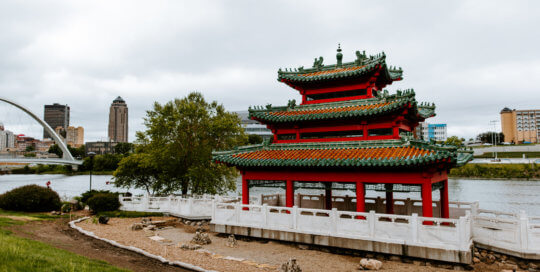
At the South entrance to the garden, pass through the Gateway for Diversity and come to the Diversity Circle. Next, you’ll cross the Bridge for Prosperity as you enter the iconic 37-foot-tall Chinese pavilion.
Bridge for Friendship
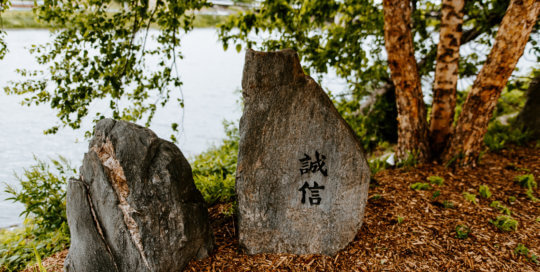
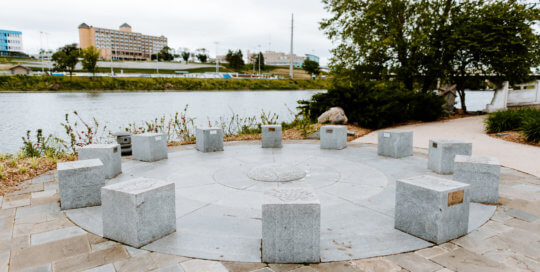
When you exit the pavilion’s North side, you’ll cross the Bridge for Friendship. As you follow the Path for Harmony you will enter into the Character Garden. Within the Character Garden, six granite boulders form a circle. Each boulder is inscribed with Chinese characters . They symbolize the morals of trustworthiness, caring, respect, fairness, citizenship, and responsibility.
The Mounds
As guests emerge on the North side, they are met with three mounded earthen berms covered in sedges and forbs. These Drumlins reflect landforms shaped by retreating glaciers. They also suggest a rolling landscape echoeing regional Iowa topography.
Botanical Collection of Unique Plantings
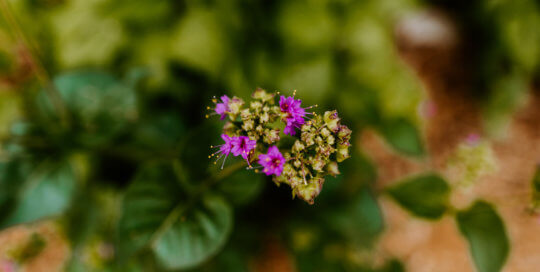
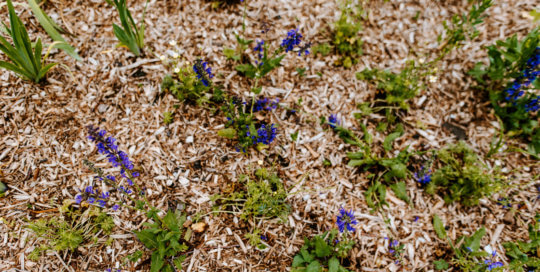
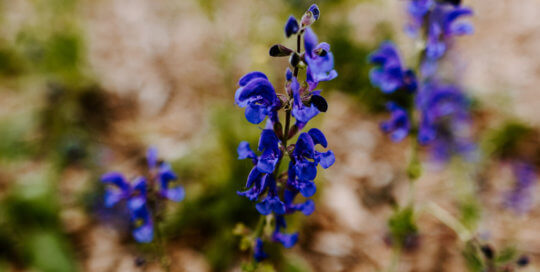
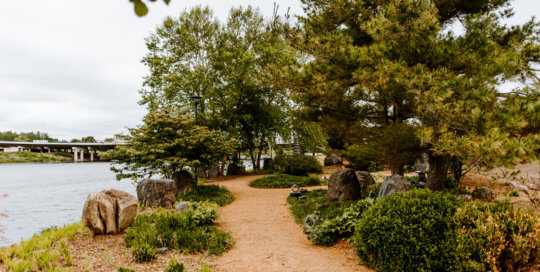
A zig-zag boardwalk weaves through a planting area designed with the oxbow wetland areas in mind. These wetlands are found in Iowa and throughout the region. The plants throughout the entire garden were chosen knowing the area is susceptible to seasonal heavy rain and occasional flooding. Finally, we continue to tweak and adjust plantings as we adapt to an ever-changing climate.
The Gallery
Please Support Your Botanical Garden
Become a Member
Donate Today
Asian Communities
Fleeing Laos in the late 1970s
Since escape meant fleeing bombs, chaos, and terrible uncertainty. As a result, Laos was a dangerous place. All because communists controlled the region, dictating to Laotian citizens precisely what they could or could not do.
The first Laotian refugees reaching Iowa came in Nov 1981.
There were over 100 families. Today there are over 2,000 Lao families in Iowa. Iowa meant safety, education, and good jobs. In addition, it meant dreams could be fulfilled.
The Lao American Association of Iowa was formed to help address issues for Laotians in Iowa. The Lao Natasinh Group teach about the Laotian culture and also perform dances for the community.
The Hmong are an ethnic group that migrated from China to Laos in the18th century.
They settled on the mountaintops of Laos for hundreds of years. In 1947, Laos King Si Sa Vang Vong declared that all Hmong were Lao citizens.
In 1960, the United States CIA recruited the Hmong as allies during the Vietnam War.
One of their many missions was to rescue downed American pilots. During this time, the Hmong established strong relationships that helped pave an opportunity for them to seek refuge in the United States after the war. The result was many Hmong moving to Iowa.
In 1976 the first Hmong refugees arrived in Iowa thanks to Governor Robert D. Ray.
Because the Hmong rely heavily on farming and agriculture, Iowa was a perfect fit. Consequently, hundreds of Hmong still reside in Iowa today.
Tai Dam are an ethnic minority who considered Northwestern Vietnam to be their homeland.
As communism descended on South Vietnam and Laos in the early 70s, the Tai Dam evacuated to Thailand. Overall, they campaigned for sanctuary and asylum. Governor Ray was the only governor willing to help.
Tai Dam were welcomed to Iowa under a refugee resettlement program that lasted 35 years.
The first group of 350 Tai Dam people arrived in Des Moines in 1975. Since then, more Tai Dam live in Iowa than anywhere outside of Asia as of today.
Many Tai Dam feel they never had a place or a land to call home, but now do.
The Tai Village has a welcome center named the Robert D. Ray ‘Tai House,’ where he is seen as the “beloved hero and Ray of Freedom.”
Govenor Robert D. Ray
When Governor Ray watched a “60 Minute” broadcast with Ed Bradley about the plight of the Vietnamese fleeing on boats, he could not bear to see so many people suffering and do nothing about it. The result?
He acted.
After the Fall of Saigon on April 30, 1975, nearly 130,000 Vietnamese were rescued and relocated throughout the U.S. Thousands of Vietnamese were resettled in Iowa. Iowa had established the first and only Bureau of Refugee Services where churches and families worked together to sponsor refugees, providing them support and resources. All in all, Iowa became their new homeland.
Vietnamese are one of the largest Asian American populations.
Nationwide, Vietnamese Americans are the fastest growing Asian American group, currently ranking fourth overall. The Vietnamese in Iowa have become teachers, doctors, lawyers, non-profit leaders, business owners. In addition, they have enlisted in the Armed Forces to serve the country.
A dark era befell Cambodia
When the Khmer Rouge, under the dictator Pol Pot, ruled the country from 1975 to 1979, life was not good for those who lived at that time. Pol Pot’s genocidal regime led to the deaths of nearly 2 million people out of a population of just 7 million.
In October 1979, tens of thousands of Cambodians fled across the border into Thailand.
Governor and Mrs. Ray were on a trip to Thailand and witnessed the terrible suffering of nearly 30,000 starving and emaciated Cambodian refugees. SInce seeing this, concern led Governor Ray to create Iowa SHARES, contributing close to $2 million for food, medicine and volunteer nurses and doctors.
Approximately 225 Cambodian families were resettled in Iowa during the late 1970s and early 80s.
Since that time, significant educational and cultural initiatives were founded:
- The Iowa Asian Alliance (IAA)
- CelebrAsian
- The state’s annual Asian heritage festival
- “A Promise Called Iowa” produced by Iowa Public Television aired
- The Robert D. Ray Asian Garden was built.
All created to preserving Iowa’s humanitarian heritage far into the future.
Know What's Going On!
SIGN UP HERE FOR
Newsletter Emails
"*" indicates required fields
How do I get to the Botanical Garden?
Access to the Botanical Garden directly from University Avenue is closed. In order to access the Botanical Garden from University Avenue, please take Pennsylvania Avenue south to Des Moines Street, turn right on Des Moines Street to the “T” intersection at Robert D. Ray Drive. Finally, turn right on Robert D. Ray Drive and the Botanical Garden is on the right after you go under the I-235 bridge.
Is parking free?
Yes, parking at the Garden is free but there are limited spaces available. Sometimes during large events you will need to use overflow parking available along Robert D. Ray Drive. Thus, consider carpooling to larger events.
Do you offer free admission to members from other gardens?
We participate in the AHS Reciprocal Admission Program. Therefore, we offer complimentary daily admission during our general admission hours to members of participating gardens. Since we do, please bring a physical or digital membership card and we will honor our membership level that is the closest equivalent to yours. In addition, for members of close gardens within a 90-mile radius, we offer up to 2 complimentary daily general admissions.
Are strollers and wheelchairs available at the Garden?
There is a limited number of wheelchairs and strollers available on a first-come, first-served basis. Because they are free to borrow, you can find them located just inside the front entryway.
Is the Garden ADA accessible?
The Greater Des Moines Botanical Garden is proud to be an ADA-compliant facility. Because we are, you'll find features like wide paths and sidewalks, accessible doors, additional restrooms, and a universal changing table. Since there is also an elevator, we provide all guests access to the conservatory balcony as well.
What is the smoking policy at the Garden?
The Greater Des Moines Botanical Garden is a nicotine-free environment. Because of this, cigarettes, electronic cigarettes, cigars, chewable tobacco and similar products are not permitted on the Botanical Garden property. Since this includes all grounds, buildings, restrooms, and parking areas, we are completely smoke-free.
Are pets allowed?
You may bring your service animal, but please leave your pets at home. The Greater Des Moines Botanical Garden does not allow pets on Garden grounds. However, service animals are permitted in compliance with the Americans with Disabilities Act (ADA). These service animals are defined by the ADA as dogs that are individually trained to do work or perform tasks for people with disabilities. Finally, service dogs are working animals, not pets. Please keep in mind the work or task a dog has been trained to provide must directly relate to the person’s disability. Dogs whose sole function is to provide comfort or emotional support do not qualify as service animals under the ADA.
Does the Garden offer tours? Yes!
The Botanical Garden offers private group tours by reservation. Make sure to go to the tours page for more details. Because tours are in demand, please book early.
Do wedding ceremonies, vow exchanges, or commitment ceremonies require advance reservations and a signed contract? Yes, they do.
Unscheduled or unpaid ceremonies are prohibited. Because of this, parties not in compliance will be asked to leave immediately. In addition, wedding-related photography, gatherings, and/or ceremonies require advance approval and reservation.
What does the Garden look like?
With indoor and outdoor space, the Greater Des Moines Botanical Garden is a great place to visit in all kinds of weather. Our gardens offer close encounters with plants and remarkable horticultural experiences. Finally, learn more about specific gardens and explore what’s in bloom on our Gardens & Societies page.
When is your on-site restaurant, Flora Café, open?
Flora Café is open from 11 am to 2 pm Tuesday through Saturday and on Sunday from 10 am to 2 pm. Flora is not open on Mondays. Also consider visiting our dining page for up to date information. Here you can find out about special dinners, picnic boxes, brunches, and other offerings.
May I bring my own food/drink to the Garden?
Outside food is not permitted. Dining options and refreshments are available at Flora Café and in the Garden Shop. Also, rental clients may use our approved caterers for food and beverages.
What is the photography policy?
Guests are invited to take candid, casual photography as well as pictures of the plants and landscapes. However, for portrait and professional photography, please consult our Photography Reservation Policy and make a photography reservation. Finally, keep in mind when the Botanical Garden is open and available for your shoot.
Does the Garden have an etiquette policy?
Our etiquette policy is designed to enhance your experience and protect the plants. We aks that you please review a copy here.
Does the Botanical Garden have a diversity statement?
It is: The Greater Des Moines Botanical Garden stands as one team devoted to learning and practicing anti-racism, inclusion, diversity, equality and accessibility, such that the Garden can be a vital resource and advocate for our diverse community. Public gardens and community green spaces have an essential role in bringing our diverse community together. We believe the Garden is a platform for a hopeful and peaceful future. In summary, together we will dedicate ourselves to the active work of listening, learning and breaking down barriers and inequities.
Prohibited Items:
- No weapons and firearms or fireworks of any kind
- Do not bring outside food, picnics, coolers, grills, or use open flames
- Outside beverages (refillable water bottles welcome)
- Pets (service animals are welcome)
- Smoking, tobacco products and devices, or electronic smoking devices
- Music (Bluetooth speakers, playing instruments, etc.)
- Bicycles and recreational scooters (including "wheelie" shoes, skates, or skateboards)
- Outside alcohol
- Guests without shoes or shirts or with clothing that may be taken as profane, vulgar, racist, sexist, or sexually suggestive
- Blankets, collapsible lawn chairs, or stools are not allowed during daily general admission or for other events—they are encouraged for attendee use only during Music in the Garden
- Balloons, open flames, sparklers
- Large signage or banners
- Plants, flowers, flower petals, props, glitter, confetti, or candles
- Tripods or monopods are prohibited inside all buildings and conservatories
- Sporting equipment (soccer balls, baseballs and gloves, footballs, hula hoops, frisbees, etc.)
If you need more information
Please connect with us through our Contact Us page. Also, you can reach us at:
Does the Botanical Garden accept plant donations?
Plant donations are considered on a case-by-case basis. If you are interested in donating a plant, please email a picture of it to giving@dmbotanicalgarden.com and a horticulturist will review the photo and respond. Finally, please consider donating to the Botanical Garden horticulture fund as a way to contribute to our growth.
Does the Botanical Garden donate to organizations?
We support various community organizations, fundraisers and other nonprofit organizations with donations of free passes or memberships. The requests are fulfilled based on how the requesting organization’s mission pairs with our mission. Therefore, if you would like to request a donation, please fill out the electronic form.
Can I review your financial documents?
Yes, we have posted our most recent 990 and audit.
Be the first to find out about events, classes & more