
Don’t Miss this Bittersweet Spectacle!
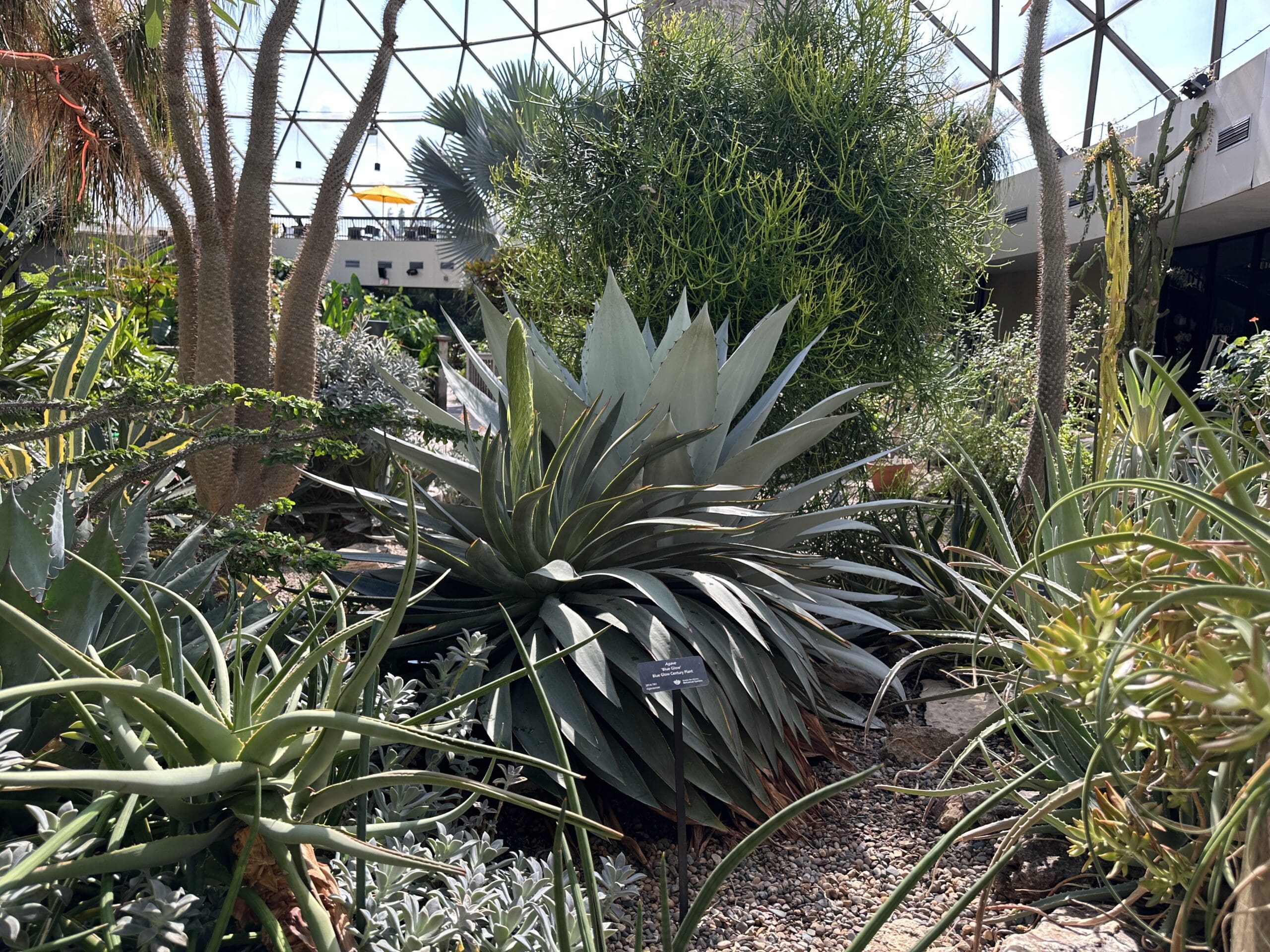
You may have gotten a chance to see our Agave ‘Blue Frost’ death bloom in 2024. This year, just in time for Halloween at the BOOtanical Garden, a dramatic demonstration of nature’s cycle has begun. Our Agave ‘Blue Glow’ and its death bloom has started its luminous legacy.
The Death Bloom in Agave ‘Blue Glow‘
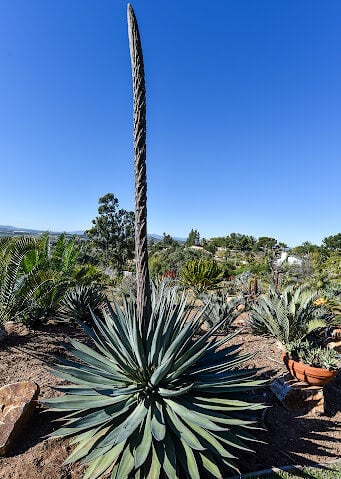
Agave ‘Blue Glow’ is famous for its glowing leaf edges and distinctive solitary rosette shape. Its spectacular, final flowering that signals the end of the plant’s life is both mysterious and beautiful. Recent garden chronicles have revealed surprising twists to the story. Kinda spooky, right?!
The Grand Finale?
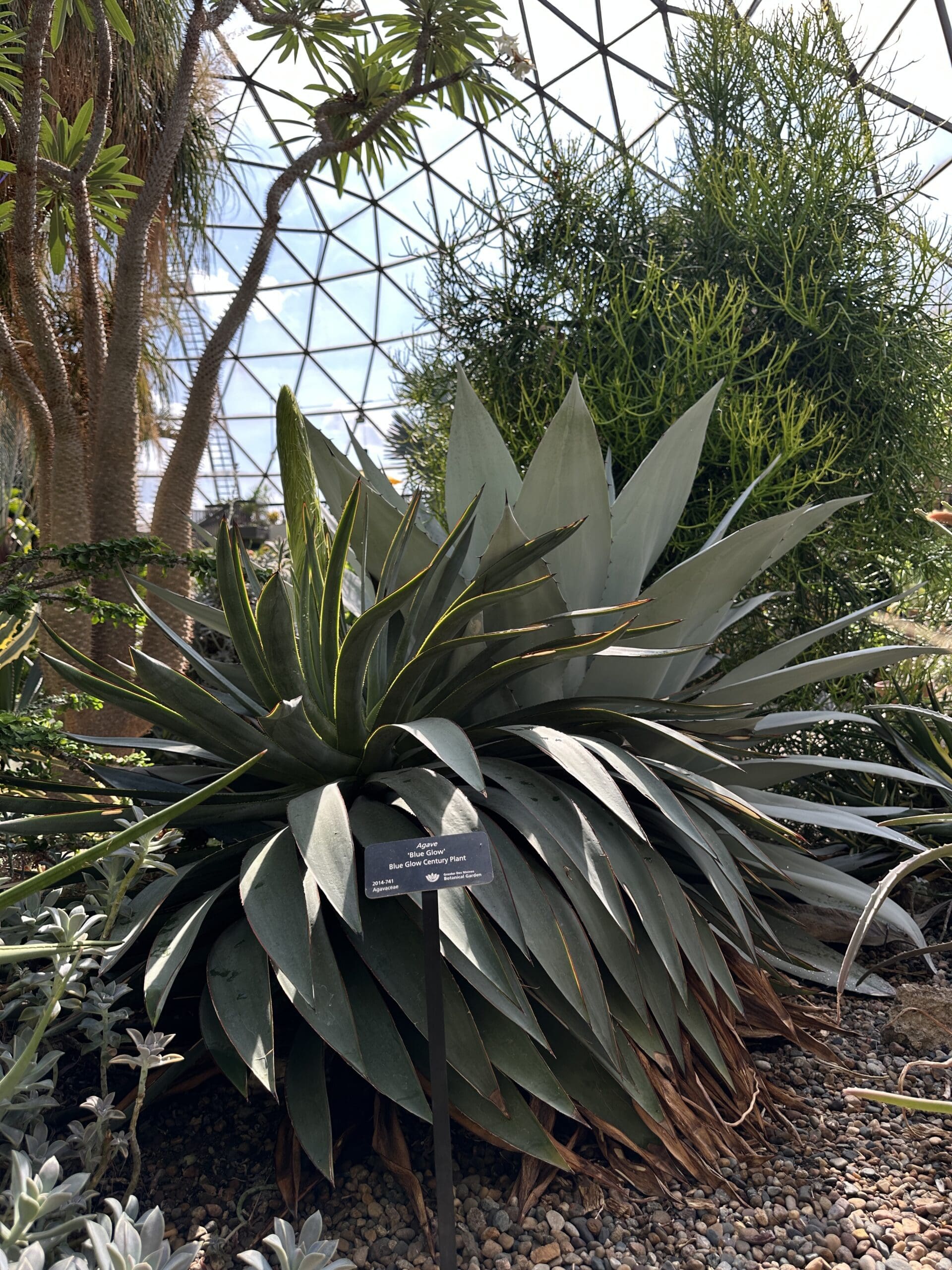
Most agave species are monocarpic, meaning each plant blooms only once in its lifetime. It sends up a tall flower stalk that draws all its energy from the mother plant. After which the plant typically dies. It’s the grand finale for agaves, often occurring after 7-15 years for Agave ‘Blue Glow‘.
Unexpected Exceptions for Survival
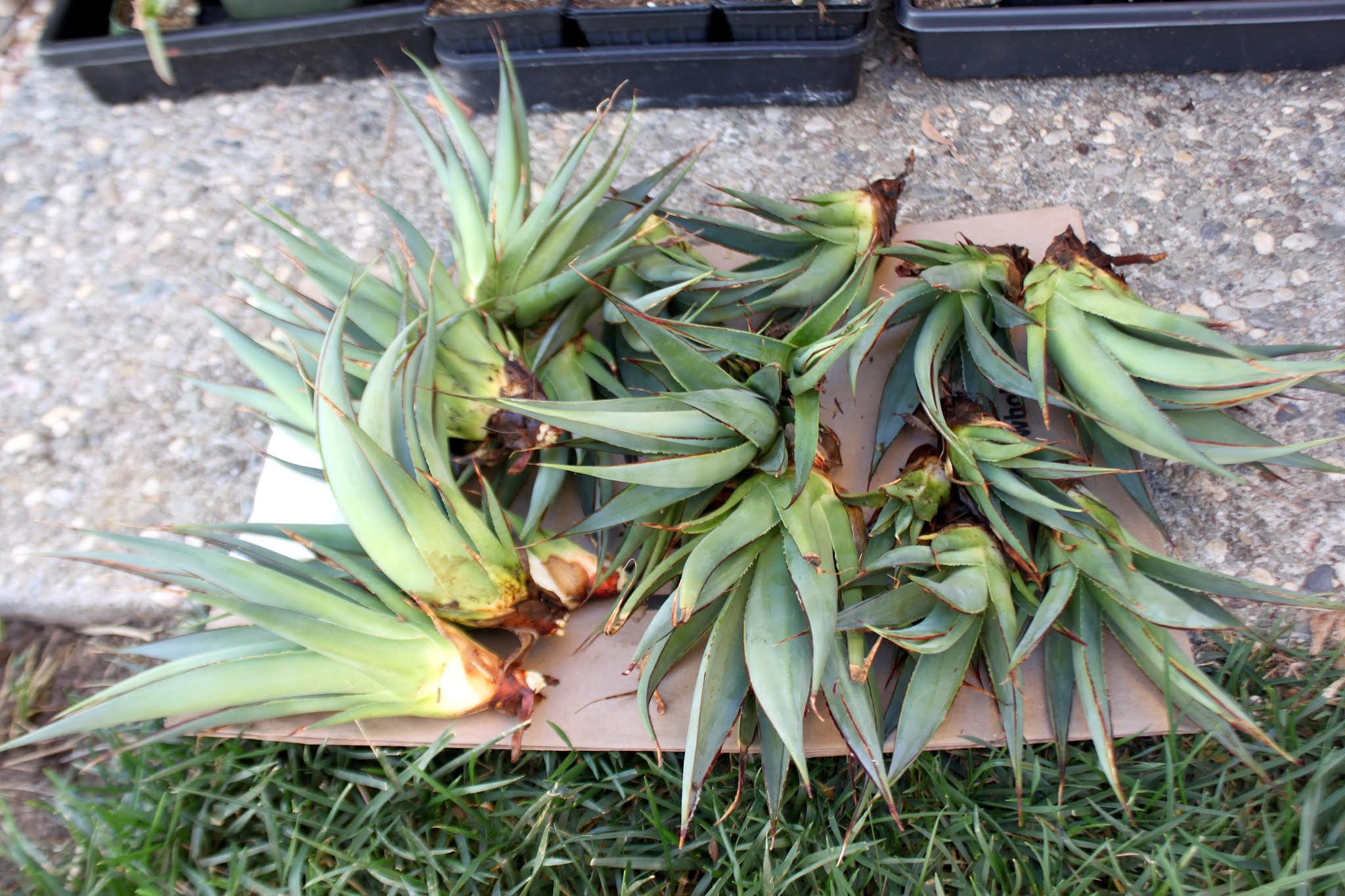
Agave ‘Blue Glow‘ is notable for rarely producing pups (offsets) at its base. Since Agave ‘Blue Glow‘ is a hybrid (Agave attenuata × Agave ocahui), it sometimes displays unexpected post-bloom behaviors. Some plants survive beyond their bloom, produce more than one bloom stalk. Some generate bulbils (small bulb-like structures that grow on the aerial parts of a parent plant and can be used for reproduction) along the dying stalk. Just another testament to the quirks hybrids can have.
Rising from the Dead

While Agave ‘Blue Glow‘ generally follows this monocarpic rule, recent observations have shown that the plant can bend the rules. Some have seen that ‘Blue Glow‘ did not immediately die after blooming, defying expectations and even producing new stalks or side shoots. In one detailed garden account, after an initial bloom in 2023, the mother plant stayed alive and began developing two more bloom stalks by 2024. After these stalks died back, bulbils (tiny plantlets) were harvested from the dying stalks, and the parent was finally removed during a cool spell. But this is the exception, not the rule.
Super Natural Drama
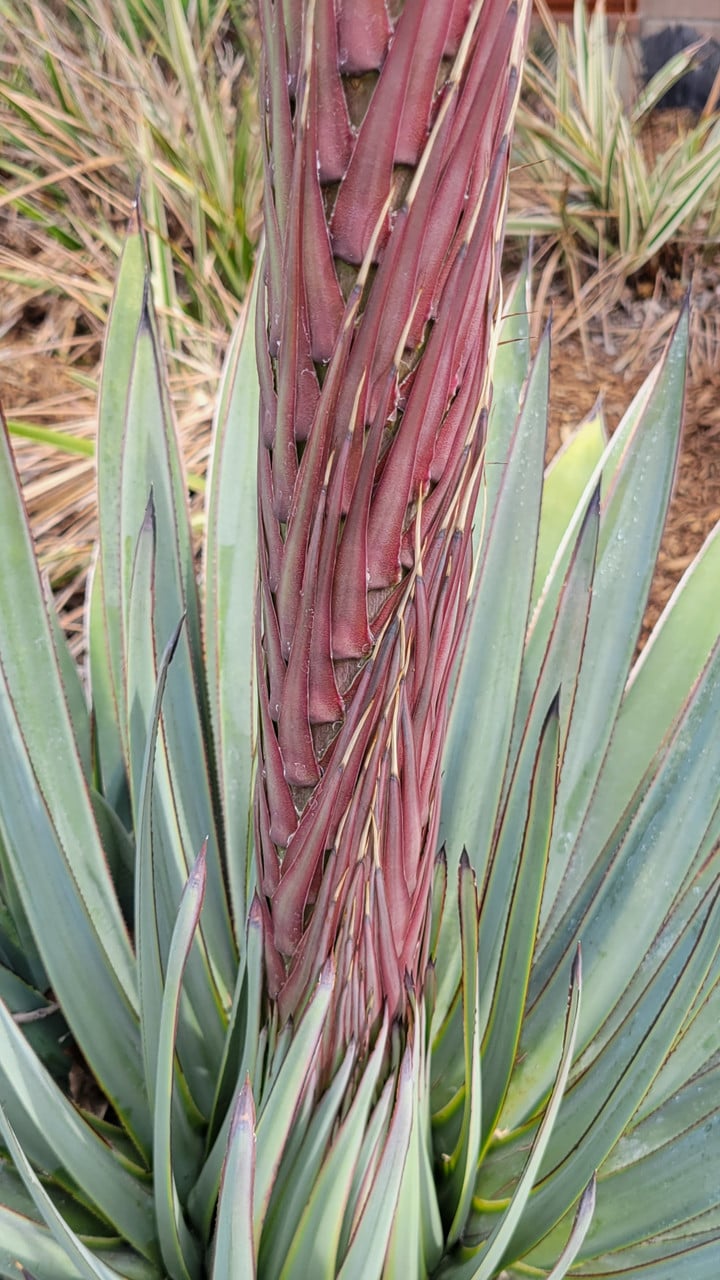
This blooming event is your chance to witness some super natural drama—as this plant expends all its remaining energy on a towering, flower-laden stalk, sometimes reaching heights of over ten feet. While it can go on for 31 days or more, snooze and you might lose your chance to see this for yourself.
“This will be a spectacular bloom and a great opportunity for folks that don’t live where these plants typically grow to experience a once in a decade (or longer) event!”
Aaron Harpold, Director of Horticulture at the Greater Des Moines Botanical Garden