Grow & Tell: Smart Watering Tips for Healthy Houseplants
One of the most important parts of indoor plant care is watering – and it’s also where many plant owners struggle. The key is simple: water when your plants need it, not on a fixed schedule.
By checking soil moisture and watering thoroughly – but not excessively – you can keep your plants healthy, prevent root rot, and encourage strong growth.
Know when to water
A quick soil check is the best way to determine when your houseplants need water.
Try the Finger Test
Insert your finger about 1-2 inches into the soil.
- If the soil feels dry at that depth, it is time to water.
- If it still feels moist, wait a day or two and check again.
Different plants have different watering needs:
- Succulents and cacti prefer soil that dries out completely between waterings.
- Tropical plants usually prefer the top inch to dry before watering again.
Always check each plant individually rather than watering them all at once.
How to Water Indoor Plants Correctly
Watering properly helps ensure moisture reaches the entire root system.
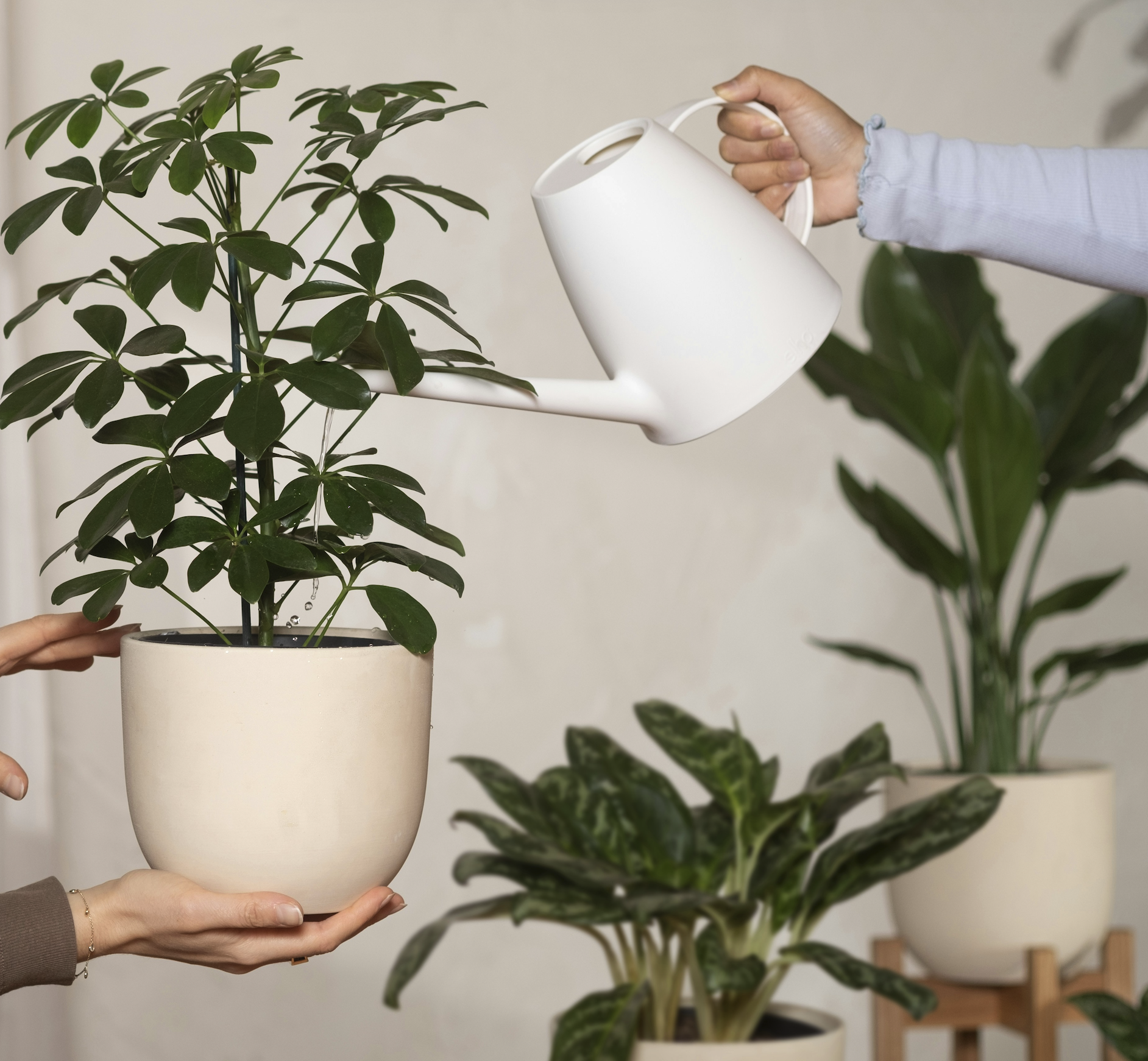
- Use a narrow-spout watering can and pour slowly across the soil surface.
- Move around the port so water spreads evenly instead of pooling in one spot.
- Continue watering until water flows from the drainage holes.
Deep watering encourages roots to grow downward and stay strong. Frequent shallow watering can leave deeper soil dry and roots weak.
Top Watering vs. Bottom Watering
Both methods can work well depending on the plant and soil condition.
Top Watering
Pour water directly onto the soil until excess drains out the bottom. This is the most common method and helps flush out built-up fertilizer salts.
Bottom Watering
Place the pot in a tray or sink with a few inches of water and allow the soil to absorb moisture from below for about 30 minutes, then drain fully. This method is helpful when soil has become extremely dry and repels water.
Never leave plant sitting in water longer than about an hour – this can lead to root rot.
Avoid Common Watering Mistakes
- Skip strict watering schedules. Watering “every Sunday” can easily lead to overwatering or underwatering. Instead, schedule soil checks.
- Always use pots with drainage holes. Standing water suffocates roots and promotes disease.
- Empty saucers after watering. Plants should never sit in leftover water.
Small Upgrades That Make a Big Difference
A few simple adjustments can improve plant health significantly:
- Use room‑temperature water to avoid shocking roots.
- Avoid softened water, which can add excess sodium to the soil
- Occasionally aerate compacted soil by gently poking holes with a chopstick or a plant stake. This helps water and oxygen can reach the full root system.
Overwatering vs. Underwatering:
How to Tell the Difference
At first glance, both problems can make plants look droopy. A closer look at the soil and leaves usually reveals the cause.
Signs of Overwatering
- Soil remains wet for days and may smell sour
- Mold, algae, or fungus gnats appear on the soil surface
- Leaves turn yellow and feel soft or limp
- Brown spots with yellow halos may appear
- Stems near the soil feel mushy
- Root may become black and slimy (root rot)
Signs of Underwatering
- Soil is dry, dusty, and may pull away from the pot edges
- Water runs straight through the pot before soaking
- Leaves become droopy but thin or papery
- Brown, crispy edges appear
- Growth slows or stops
- Plants often perk up quickly after watering
How to Quickly Tell the Difference
Check the soil about 1-2 inches deep.
- Moist soil + wilting plants = likely overwatering
- Dry soil + wilting plant = likely underwatering
Also watch for leaf patterns:
- Soft yellow leaves + sour soil smell = overwatering
- Crispy edges + curling leaves = underwatering
Simple Fixes
If a plant is overwatered:
- Allow the soil to dry more between waterings
- Empty saucers regularly
- Improve drainage or repot into fresh potting mix if root rot is present
If a plant is underwatered:
- Water deeply until excess drains out
- Rehydrate dry soil slowly so it can absorb moisture properly
- Continue watering when the top inch or two dries
Healthy water habits help your plants thrive and make indoor gardening far more enjoyable.
Watch this short video for a visual, step-by-step guide on how to water indoor plants wisely.