Some of the most important parts of a tree are the ones you can’t see
At the Greater Des Moines Botanical Garden, an upcoming renovation to the planting beds in the Ruan Allee gave our horticulture team an opportunity to take a closer look at the health of these trees. What we found beneath the soil is a common problem that can affect trees in home landscapes, too: stem girdling roots.
What are they, how can you spot the warning signs and what can be done about them? Let’s dig in.
A Shady Allée Takes Shape
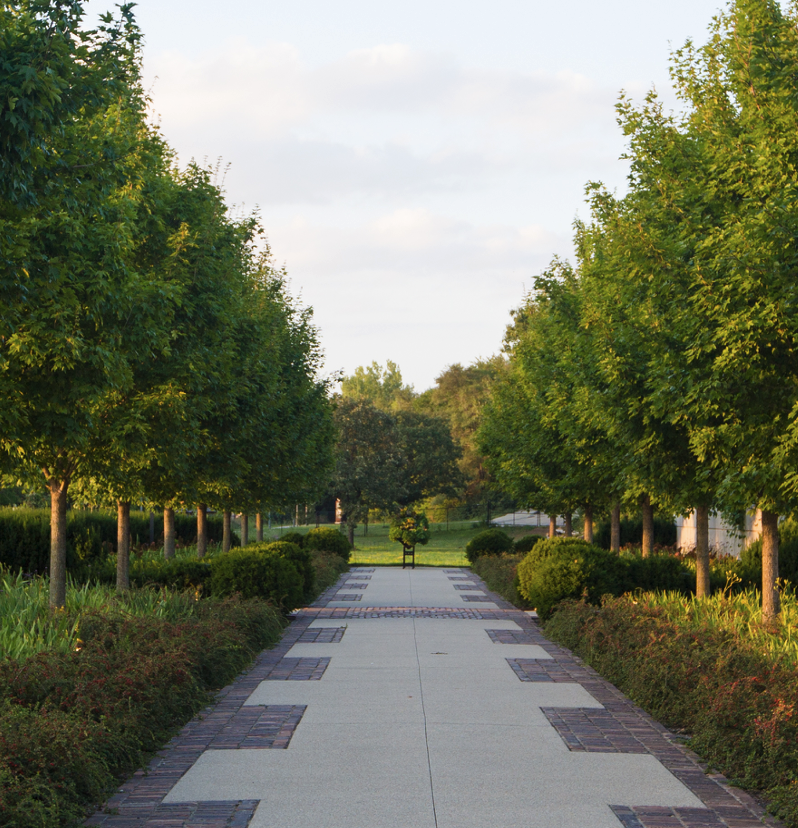
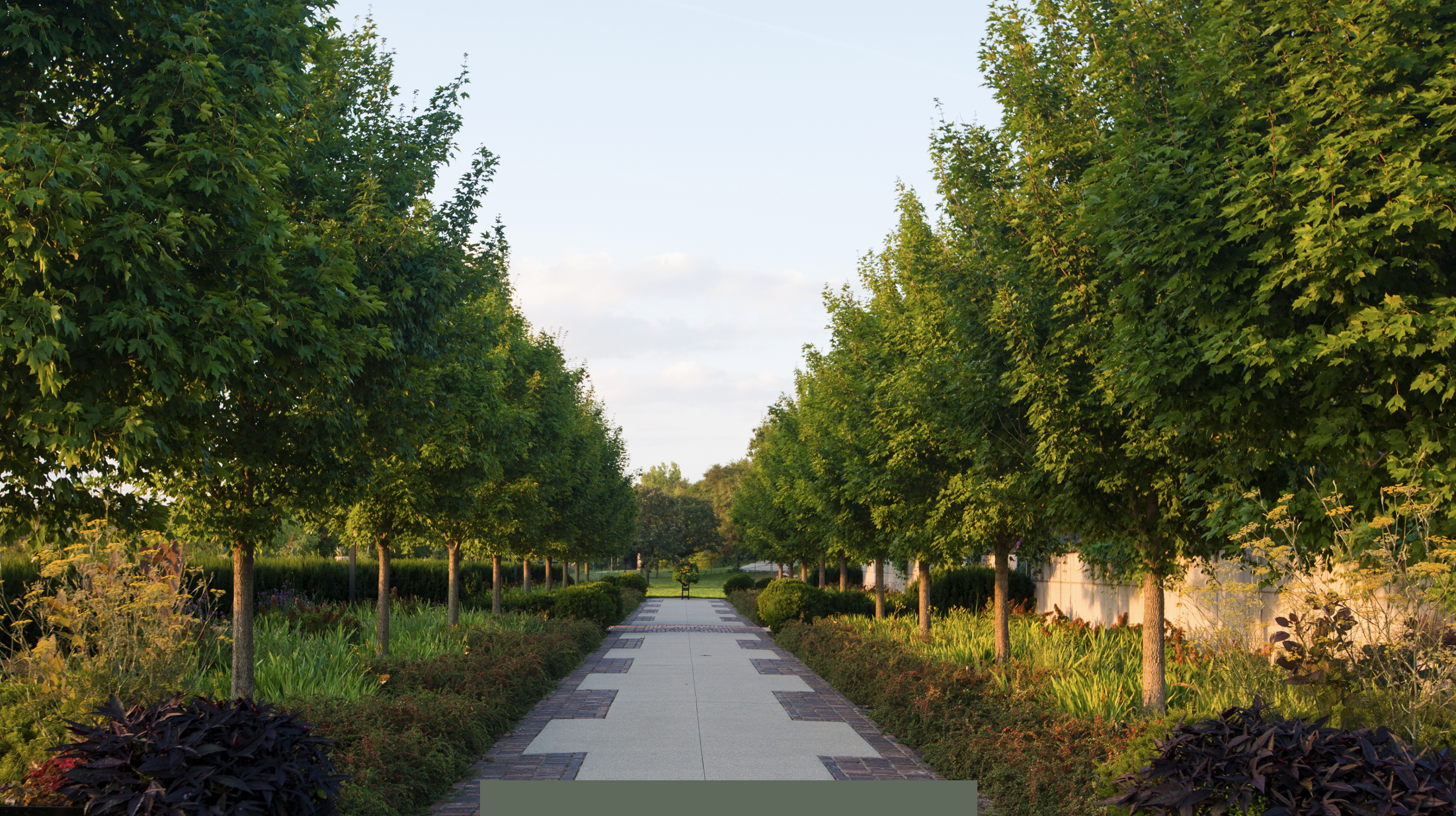
The Ruan Allee is lined with 20 State Street® Miyabe maples (Acer miyabei ‘Morton’) leading toward the Reflection Garden.
Installed in 2014, these trees were selected for their upright, rounded growth habit, dense dark-green foliage and heavily branched canopies. More than a decade later, their canopies are beginning to meet above the walkway, creating the shady experience envisioned when the allée was designed.
As the trees have matured, however, some have also developed root issues that could affect their long-term health.
What Are Stem Girdling Roots?
Stem girdling roots are roots that grow against or around the base of a tree’s trunk rather than extending outward.
The problem can become more serious over time. As both the trunk and girdling root increase in diameter, pressure builds where they meet. That pressure can interfere with the movement of water and nutrients between the roots and canopy.
Early effects may be subtle. Over time, a tree can experience reduced growth, twig and branch dieback, and eventually more significant decline.
And because the problematic roots are often underground, you may notice signs in the trunk before you ever see the roots themselves.
What Should You Look For?
A healthy tree trunk typically widens as it meets the ground, creating what arborists call the root flare.
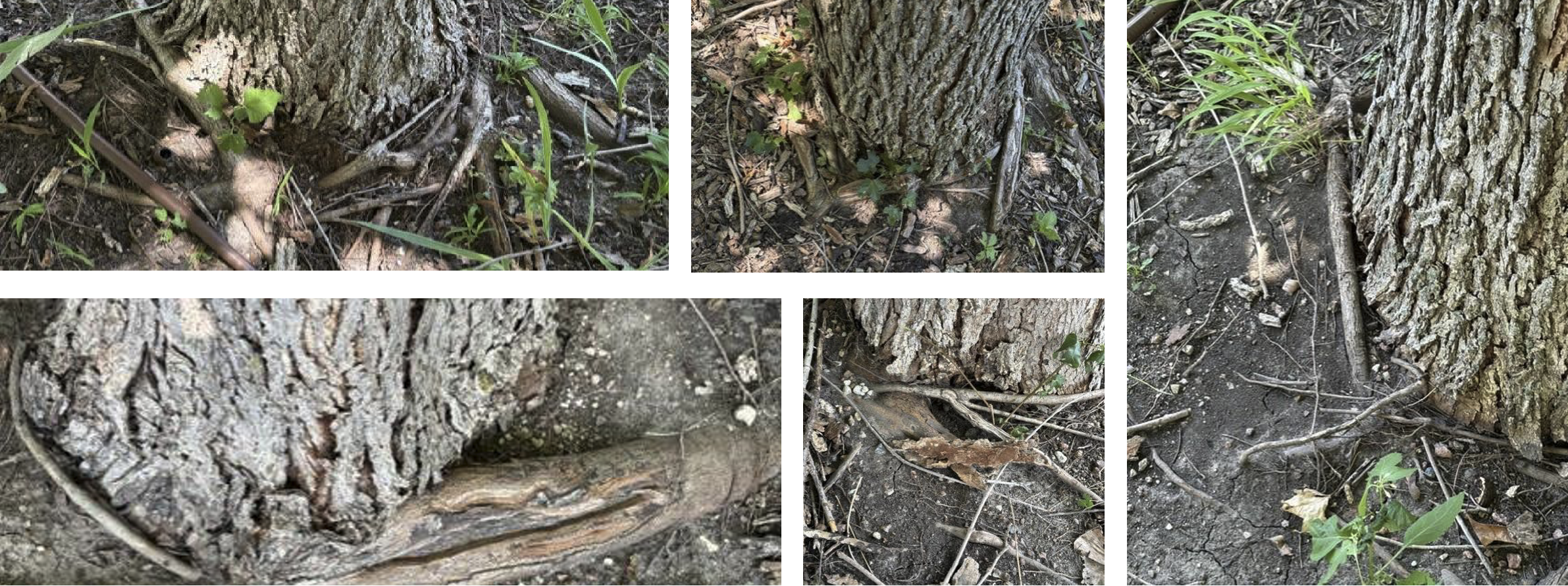
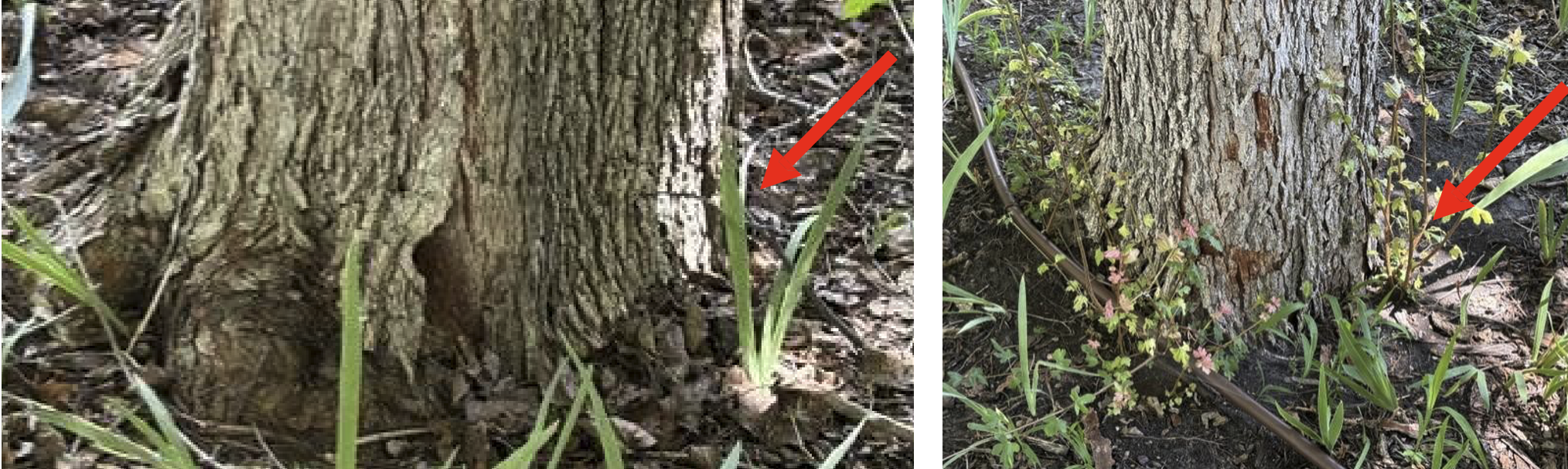
When one side of the trunk appears unusually straight or flattened instead of flaring outward, a root may be pressing against the trunk below the soil. Sprouts emerging near the base can be another sign of stress.
We found both signs among trees in the Ruan Allee, and 19 of the 20 trees appear to have some degree of dysfunctional root growth that may need to be addressed.
Examples of flattened trunk areas and visible girdling roots in the Ruan Allee.
Getting to the Root of the Problem
To learn what’s happening below the soil without unnecessarily damaging the trees, our team will use a process called root collar excavation.
A specialized tool known as an AirSpade uses compressed air to carefully move soil away from the base of the tree. Unlike traditional digging, this approach allows the team to expose the root system while minimizing damage to fine roots.
We’ll begin conservatively, excavating approximately 18 inches from the base of each affected tree. Once the roots are visible, the team can evaluate the extent of the problem and determine whether additional excavation is necessary.
Problematic roots can then be selectively pruned, including roots already girdling the trunk and others likely to create problems as the tree continues to grow.
A flattened trunk and missing root flare can indicate a girdling root below the soil.
Why Do the Work in Fall?
Timing matters when working with a tree’s root system.
We’re planning this work for fall, as the trees transition toward dormancy and conditions are favorable for minimizing stress. We’ll also focus only on trees showing signs that intervention is warranted, limiting unnecessary disturbance to the root systems.
The goal isn’t a dramatic transformation visitors will notice immediately. It’s something much more important: giving these trees the best opportunity to remain healthy for years to come.
Caring for the Garden Above and Below Ground
Root collar excavation and selective root pruning are tools arborists can use to address girdling roots and support the long-term health of affected trees.
This fall, we’ll put those techniques to work in the Ruan Allee with Perficut and Mindy Charron, their Master Arborist. We’re also very grateful to Mary Oothout for her generous support of this important tree-care project and her investment in the long-term health of the Ruan Allee.
The next time you walk beneath the leafy canopy of the Ruan Allee, take a look down, too. Healthy trees depend just as much on what’s happening below the soil as what we can see above it.