The Bloom That Tricks Flies
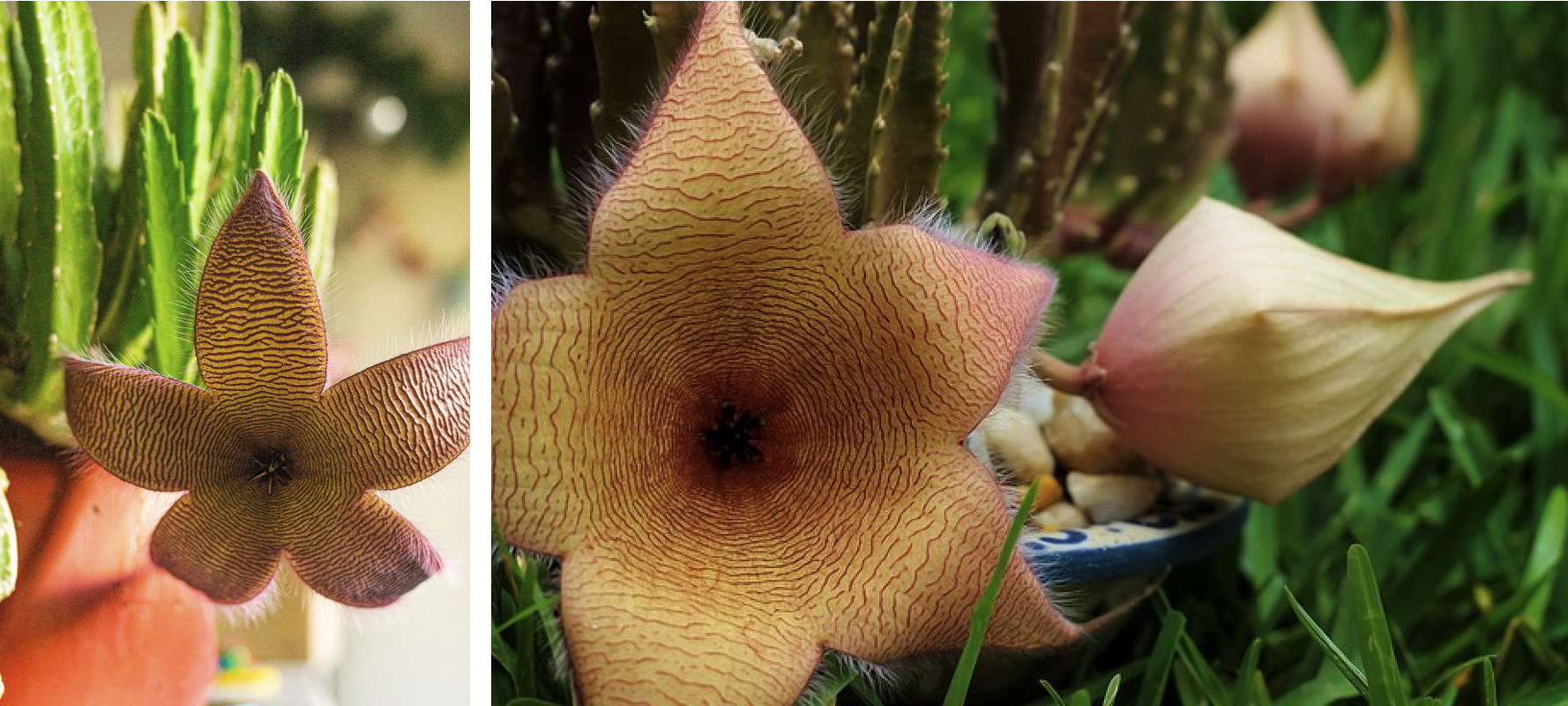
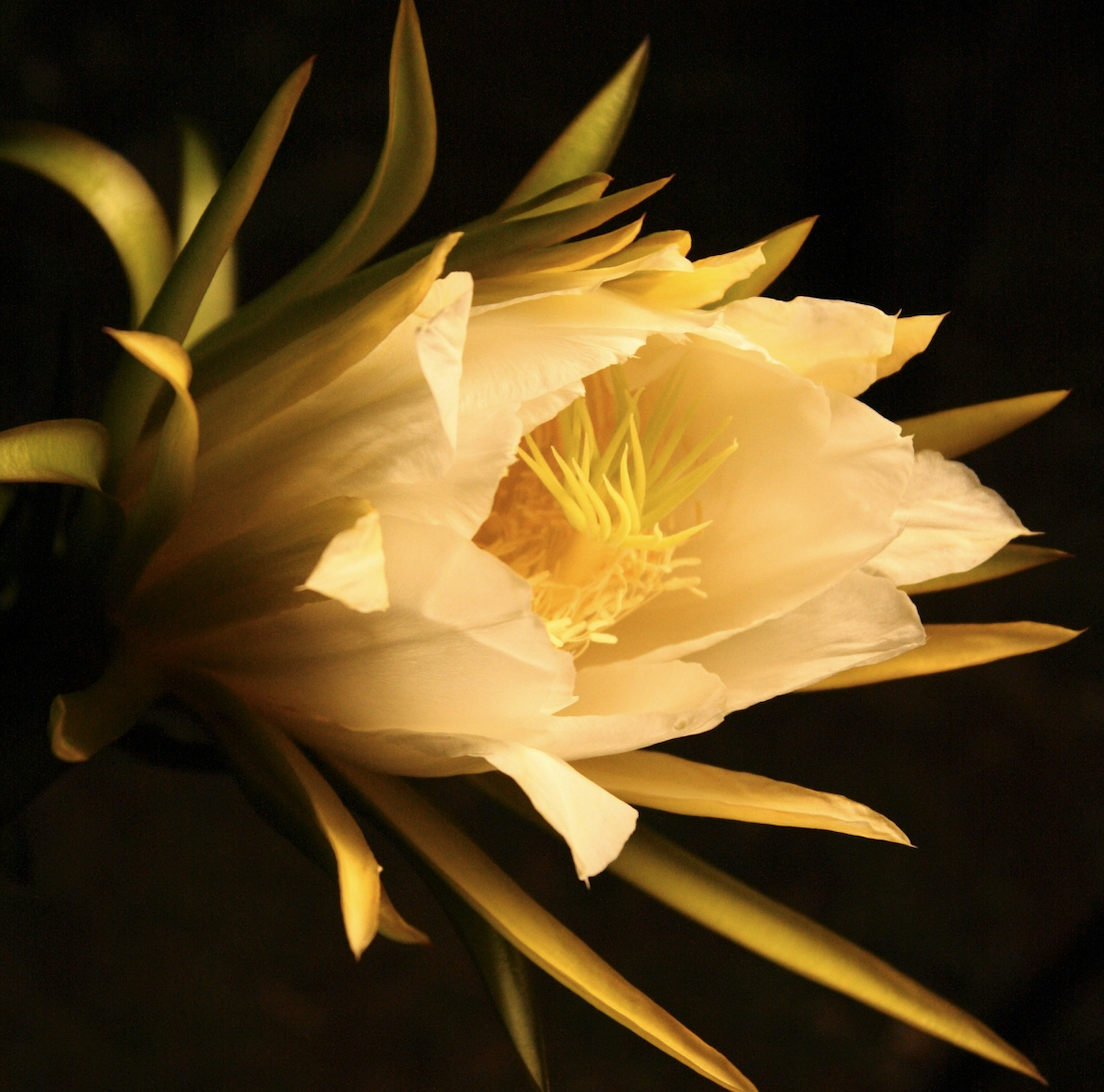
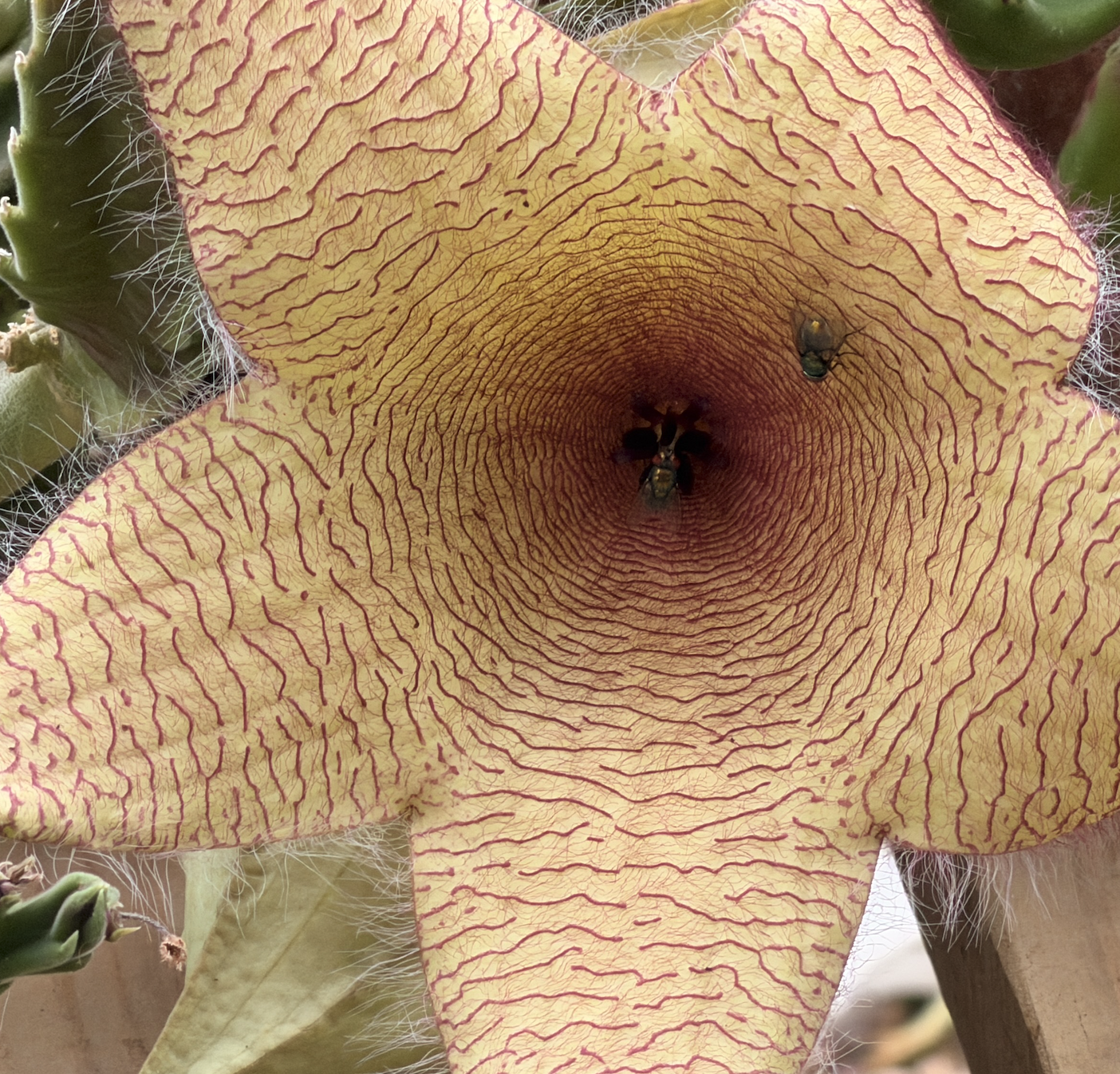
At first glance, Stapelia gigantea looks almost too extraordinary to be real. Its enormous, star-shaped flowers can grow larger than a dinner plate, with pale yellow petals marked by reddish lines and covered with fine hairs.
But step a little closer, and you’ll quickly discover what makes this beautifully bizarre succulent truly unforgettable.
Not Every Beautiful Flower Smells Like Roses
The usual odor of Stapelia gigantea mimics decaying organic matter. While that may not sound appealing to us, to certain flies, it’s an irresistible invitation.
Drawn in by the scent and appearance of the flower, flies investigate what seems like a promising place to feed or lay eggs. In the process, they can pick up pollen and carry it to another flower.
The flies may have been fooled, but the plant gets exactly what it needs: a pollinator.
It’s a fascinating example of mimicry—and a reminder that flowers aren’t designed to appeal to humans. They’re designed to attract the pollinators they depend on.
A Succulent With a Few Surprises
Despite its unusual appearance and reputation, Stapelia gigantea isn’t a cactus. And although its carrion-like scent attracts flies, it isn’t a carnivorous plant, either.
It’s a succulent native to parts of easter and southern Africa and belongs to the dogbane family, Apocynaceae—the same plant family that includes milkweeds.
Its thick, fleshy stems store water, helping the plant survive dry conditions. Then, when it flowers, those relatively understated stems produce enormous blooms that are anything but subtle.
Why Stapelia gigantea Stands Out
There’s a lot packed into one strange plant:
- Giant flowers: Blooms can exceed 12 inches across.
- A convincing stink: Its scent helps attract flies that can serve as pollinators
- Unexpected identity: It’s a succulent, but not a cactus—and despite its fly-attracting strategy, it’s not carnivorous.
- Botanical trickery: Its combination of scent and appearance makes it a remarkable example of mimicry in the plant world.
Beautifully Bizarre
Stapelia gigantea reminds us that nature doesn’t define beauty the way we do.
A flower doesn’t need to smell sweet to be successful. It doesn’t need bright colors to attract a butterfly or nectar to entice a bee. Sometimes survival calls for something much stranger.
And that’s part of what makes exploring the plant world so much fun.
Discover More Weird and Wonderful Plants This October
Want to see Stapelia gigantea in bloom? Because flowering can be unpredictable, watch for our Bloom Alerts for your chance to experience this unforgettable stinker at the Greater Des Moines Botanical Garden.
And throughout October, we’re embracing the stranger side of the plant world during BOOtanical Garden Halloween Explore carnivorous plants in the Gardeners Show House and discover activities and programs inspired by some of nature’s creepiest adaptations.
Succulent Cauldron Drop-In
Offered nightly, 6–9 PM
Plant a vining succulent in a mini cauldron during this self-guided activity. No preregistration required.
Carnivorous Plant Container
Thursday, Oct. 29, 5:30–7 PM
Learn about carnivorous plants, their unusual adaptations, and how to care for them. Then create a container of carnivorous plants to take home.
Halloween Happy Hour
Saturday, Oct. 31, 6–7 PM | Ages 21+
Explore poisonous plants, bat pollination, carnivorous plants, and other creepy corners of the plant world. Participate in a live carnivorous plant feeding and take home a plant of your own.