Our hort team had a mystery to solve.
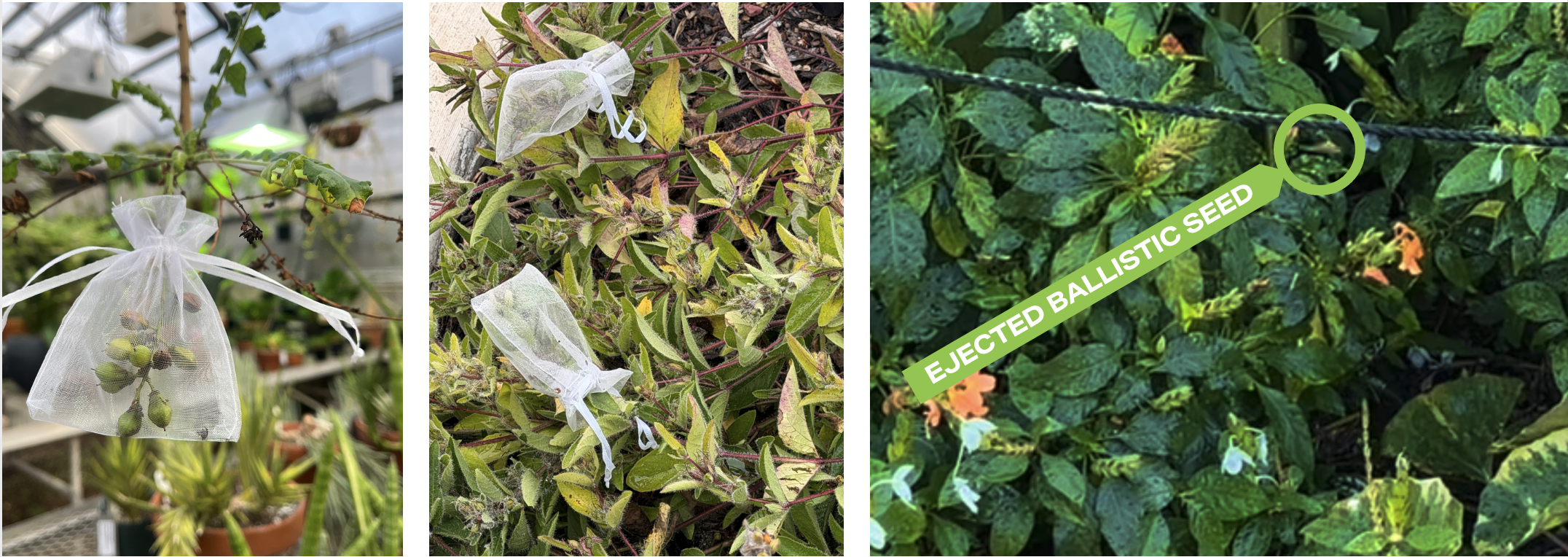
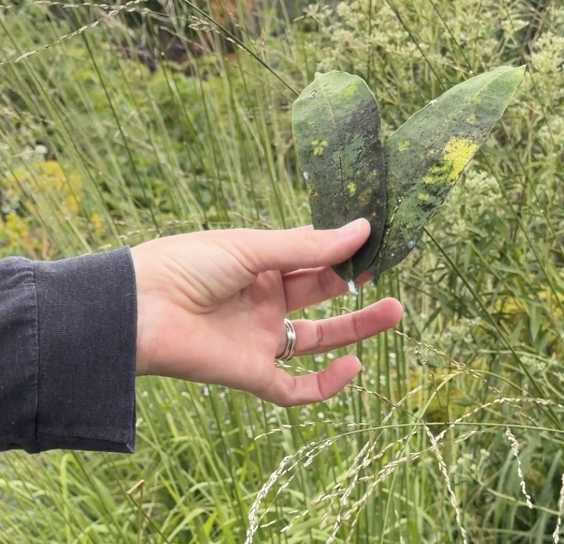
We wanted to collect seeds from wild petunia (Ruellia humilis) growing in the Greater Des Moines Botanical Garden’s parking lot gardens. But whenever we checked the plants, the mature seed pods were empty. Only green, immature pods remained.
Where were all the seeds going?
It turns out, they were launching themselves.
Wild petunia uses a fascinating strategy called ballistic seed dispersal, sending its seeds flying away from the parent plant. And once we understood what was happening, our team came up with a simple way to catch them.
What is Ballistic Seed Dispersal?
Plants can’t pick up their seeds and carry them to a new home, so they’ve evolved some remarkable ways to move the next generation.
Some seeds float on the wind. Others travel by water or hitch a ride on animals. And some plants take a much more dramatic approach: they launch their seeds through the air.
Known as ballistic dispersal, or ballochory, this happens when a fruit or seed pod builds mechanical tension and suddenly releases it, flinging seeds away from the parent plant. Touch, drying, rain, or simply reaching maturity can trigger the launch.
Think of it as a tiny botanical catapult.
Why Launch a Seed?
Landing directly beneath a parent plant isn’t always the best place for a seed to begin life.
There, a seedling may have to compete with the established plant for sunlight, water, nutrients, and space. Moving even a short distance away can give the next generation a better opportunity to grow.
Ballistic seed dispersal usually isn’t designed for long-distance travel. Instead, it gives seeds a quick push beyond the parent plant, scattering them across nearby soil, leaf litter, and surrounding vegetation.
How Does a Seed Pod “Explode”?
The secret is stored energy.
As a fruit or seed capsule matures, its tissues may dry, shrink, swell, or change at different rates. This creates a tension inside the structure. Eventually, that stored energy is released.
Depending on the plant, the fruit may suddenly split open, curl backward, twist, or burst sending seeds flying.
The preparation can take days or weeks. The launch itself may happen in a fraction of a second.
How Do You Catch a Seed That Wants to Fly?
Back to our wild petunia mystery.
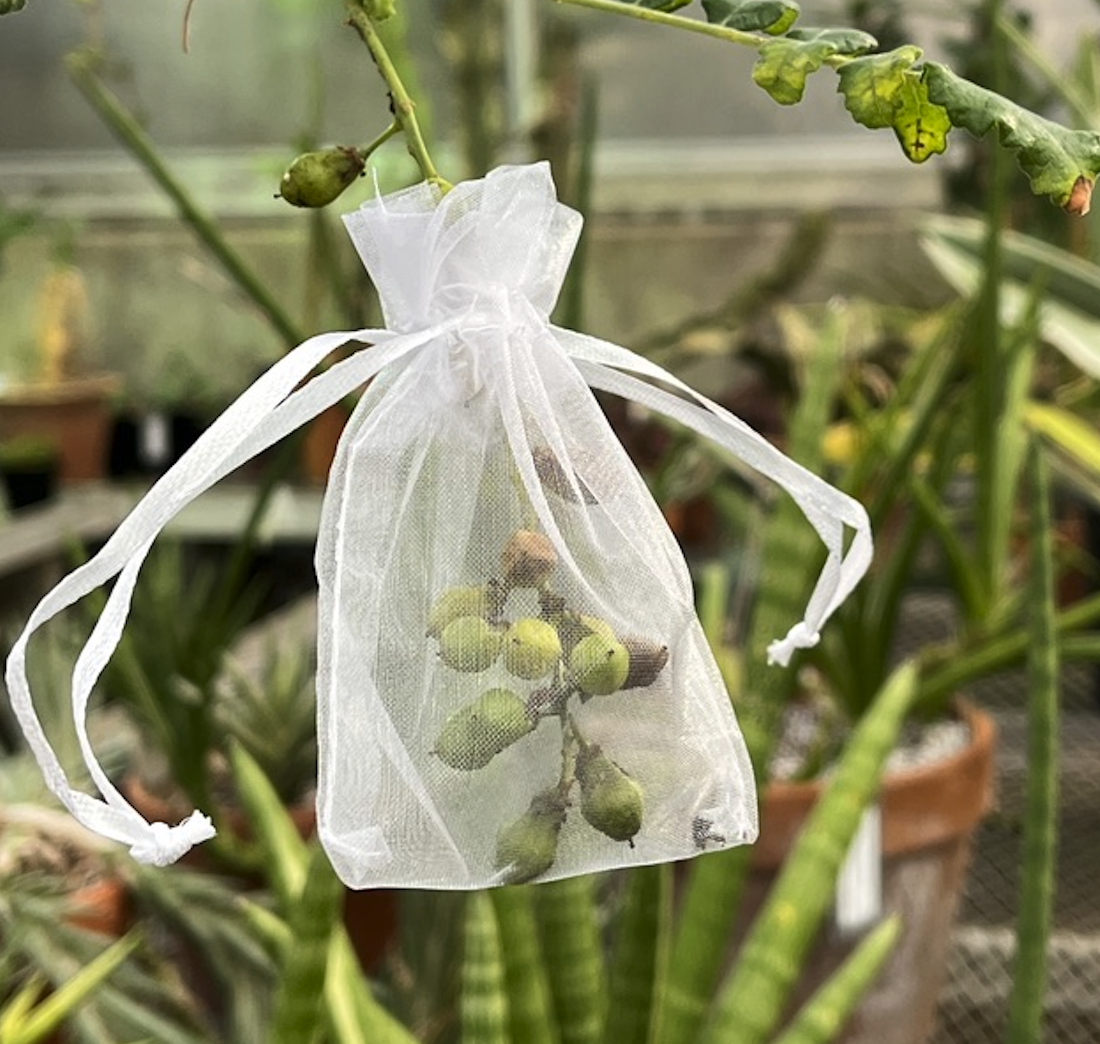
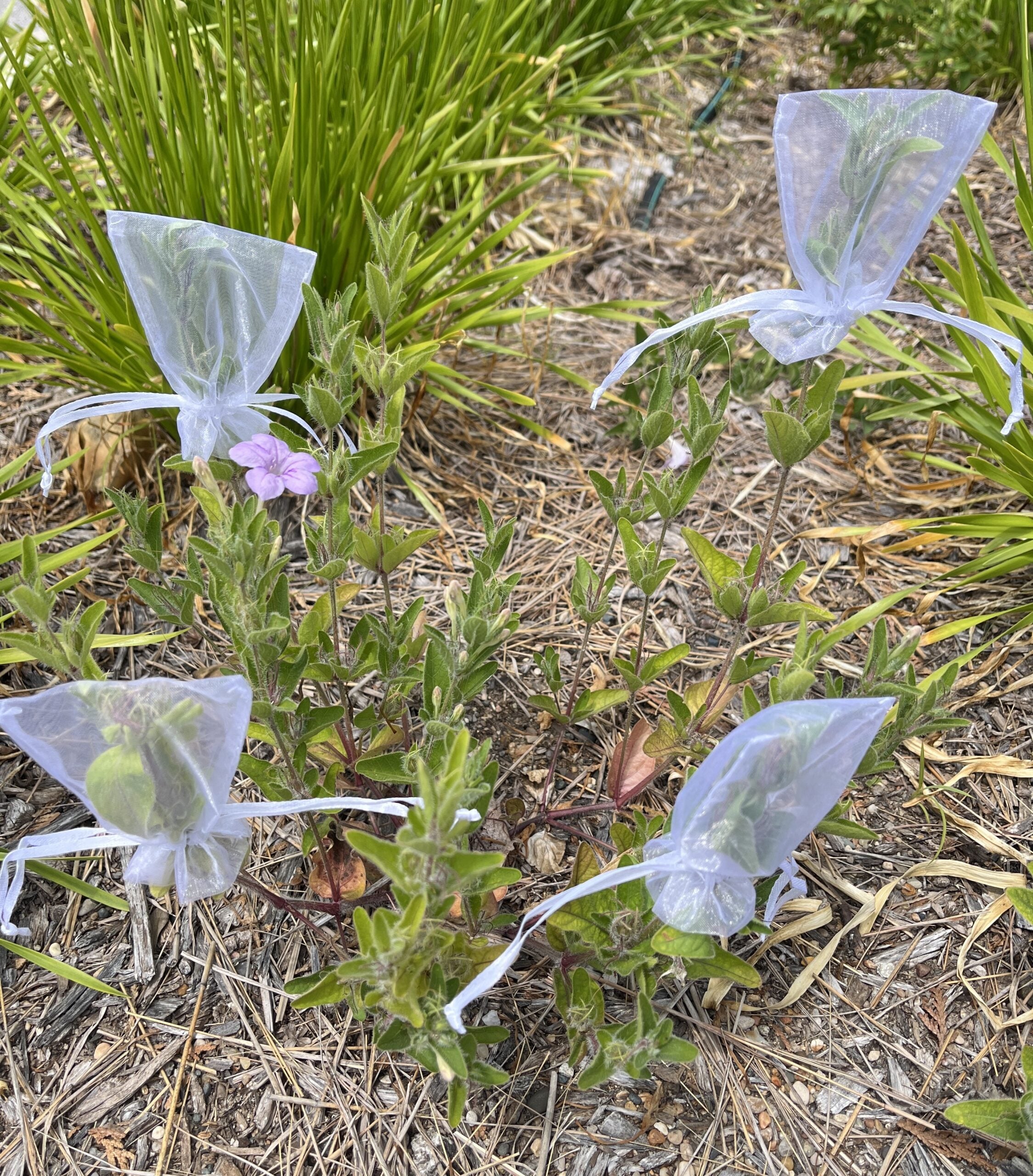
Once our horticulture team realized Ruellia humilis was ejecting its mature seeds before we could collect them, we changed our approach. Instead of waiting for the pods to ripen, we place small mesh bags over immature seed pods. When a pod eventually releases its seeds, the bag catches them.
So, if you notice little mesh bags tied around wild petunias in the Botanical Garden’s parking lot gardens, now you know why. They’re tiny seed-catching nets.
Another Seed Launcher in the Conservatory
You can find another example of ballistic seed dispersal inside the conservatory.
Ecbolium viride belongs to the same plant family as wild petunia: Acanthaceae. Plants in this family can have a specialized structure known as a jaculator, a hardened, hook-like structure associated with the seed that helps propel it from the fruit.
It’s a wonderfully fitting name for a botanical launch mechanism.
Other Plants That Send Seeds Flying
Ballistic seed dispersal isn’t limited to these Garden residents. Plants around the world have developed their own variations.
- Touch-me-not or jewelweed (Impatiens): Ripe seed pods are extremely sensitive. A light touch can cause the pod walls to spring backward, scattering seeds—which explains the name “touch-me-not.”
- Wild geraniums and cranesbills: Their distinctive fruits develop long, beak-like structures that change as they dry. That movement can help fling seeds away from the plant.
- Squirting cucumber: Not to be confused with the cucumber in your vegetable garden, this plant builds pressure inside its ripening fruit. When released, seeds are propelled away in a spray.
- Sandbox tree: This tropical tree takes explosive dispersal to another level. Its woody fruit capsules can split apart with an audible sound, forcefully scattering their seeds.
A Little Lesson in Plant Engineering
Ballistic seed dispersal is a wonderful reminder that plants may be rooted in place, but they are anything but boring. A seed pod doesn’t need muscles or a motor to move quickly. Its shape, structure and stored mechanical energy do the work.
The next time you encounter a seed pod, take a closer look. It may be waiting quietly for its moment to launch the next generation into the world.