
Spring Emblems
When I submitted the manuscript for my last book, Plants With Style, my editor wondered what exactly I meant by emblems, the title of the third chapter. Maybe it was March excursions into the woods north of my family’s home or the June hikes into the prairie down the road from grandma’s farm. Along those routes to my education as a natural gardener, I came to believe that some plants uniquely define the season in which they shine.
I believe in and cherish brevity of the botanical kind. While I love my lingering favorites, I’m smitten with ephemeral pleasures.
1. Sanguinaria canadensis (bloodroot)
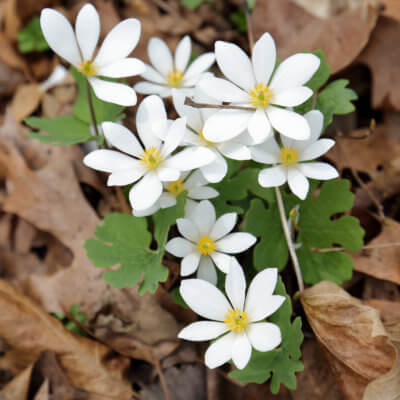 With a March birthday, those boyhood excursions in the same month were my own way of celebrating my favorite gift, the onset of spring. I would pack a backpack of the junior botanist’s essentials: binoculars (for ornithological curiosities), a hand lens, my waterproof notebook and a weathered first edition of Wildflowers of Iowa Woodlands by Sylvan Runkel and Alvin Bull.
Bloodroot was my quarry, a snow-petalled poppy that produced the juiciest sanguine sap when I would dig up and puncture a small rhizome. I was careful not to touch as the field guide instructed (the sap has morphine-like properties). Years later, the double-flowered version ‘Multiplex’ would form a handsome colony in my shade garden, the Cadillac garden variety to the Kia of wilder circumstances.
2. Corydalis solida (appleblossom fumewort)
 I’ll never understand the colloquial value of fumewort, especially applied to something as delicate as these minor bulbs of the garden floor. Their ornate flowers and feathery leaves are reminiscent of not-so-distant cousins Dicentra cucullaria (Dutchman’s breeches), although in richer shades of pink, red and purple.
Over the years an assorted troupe of colors has reseeded itself throughout my back garden, venturing into the lawn alongside dandelions and violets. I just delay mowing a week or two. Despite a brief display, they’re just darn pretty.
3. Hepatica nobilis (hepatica)
 The subject of searing nomenclatural scrutiny, hepaticas might well never know exactly where they came from or who they are as long as humans are involved. Found the world over, they have been egregiously lumped into one giant special bucket.
Genealogy aside, the vernal hunt for their marked leaves and variable flowers became a college-era ritual at Ledges State Park. Sometimes alone and sometimes with cohorts, I would scour the limestone ridges for varieties in leaf and flower, sifting through the genes with each seasonal scoop.
4. Pulsatilla patens (pasqueflower)
 An earlier generation of Midwesterners used prairie crocus as a common moniker for the plant we refer to today as pasqueflower. Arguably kin to Anemone, pasqueflowers may be the prairie’s only true harbinger, emerging from the grassy straw of last season cloaked in ashy silk.
While I don’t always make the annual trek to the Loess Hills to observe them drifting across those backbone hills and ravines, I revel in the opportunity when I get the chance. I still mean to grow them someday, if only seed set didn’t occur so inconveniently in late May.
These seasonal reminders ground us to the land, true emblems of our natural heritage that we ought to propagate and preserve.