

So Much Beauty…with Some Danger too
Iowa is awash in a sea of blooms especially visible now with midsummer flowering. But are they all nature’s art or a nuisance? A wildflower or a weed? Or worst, something that can do harm?
Iowa is one of six states where Queen Anne’s Lace is rated noxious in the vast majority of counties, meaning it needs to be controlled. “It’s an opportunistic plant,” said John Pearson, an ecologist at the Iowa Department of Natural Resources.
Excerpt from the DM Register article: Queen Anne’s Lace exploding in Iowa, Mike Kilen, mkilen@dmreg.com
Pretty or Pretty Deadly?

Queen Anne’s Lace is the friendlier cousin in the carrot family that unfortunately has a darker relative, poison hemlock, which looks so similar it’s hard to tell them apart. The phrase “Queen Anne has hairy legs.” is a mnemonic that helps distinguish it.
Another ‘Wild’ Relative

Wild parsnip is a member of the carrot/parsley family, and like giant hogweed, produces sap containing chemicals that can irritate human skin.
The plant forms dense stands that outcompete native plants, reducing biodiversity, and the quality of agricultural forage crops such as hay, oats, and alfalfa.
Wild parsnip has sharply-toothed leaflets shaped like a mitten.
Same Family, but Friendly…

While the Greater Des Moines Botanical Garden features beautiful blooms that have a similar look to some of these invasive species, they are not poisonous nor harmful to humans or wildlife.
Featured in our gardens:
Ammi visnaga, flowering in the Wells Fargo Rose Garden, 7/13/25 (below)

Foeniculum vulgare, or bronze fennel, flowering in the Wells Fargo Rose Garden, 7/13/25 (below)

Patrinia scabiosifolia, or golden lace, flowering in Hillside Garden, 7/13/25 (below)

Seseli gummiferum, or moon carrot, flowering in the Dorothy and Max Rutledge Conifer Garden, 7/13/25 (below)

Zizia aurea, or Golden Alexanders, immature seedheads in Lauridsen Savanna, 7/13/25 (below)

Added Benefits
In addition to being beautiful, most of these plants are in the carrot family, Apiaceae. Plants in this family are the preferred host plants for the black swallowtail butterfly.
Black swallowtail caterpillar on Zizia aurea, Lauridsen Savanna, June 2024 (below)

Know That We Are Looking Out for You.
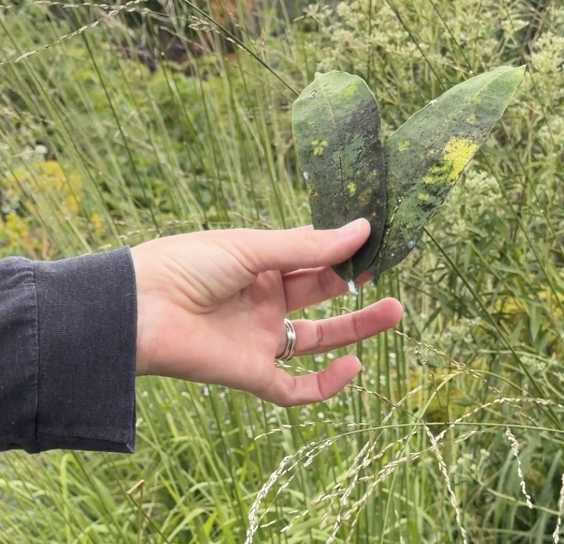
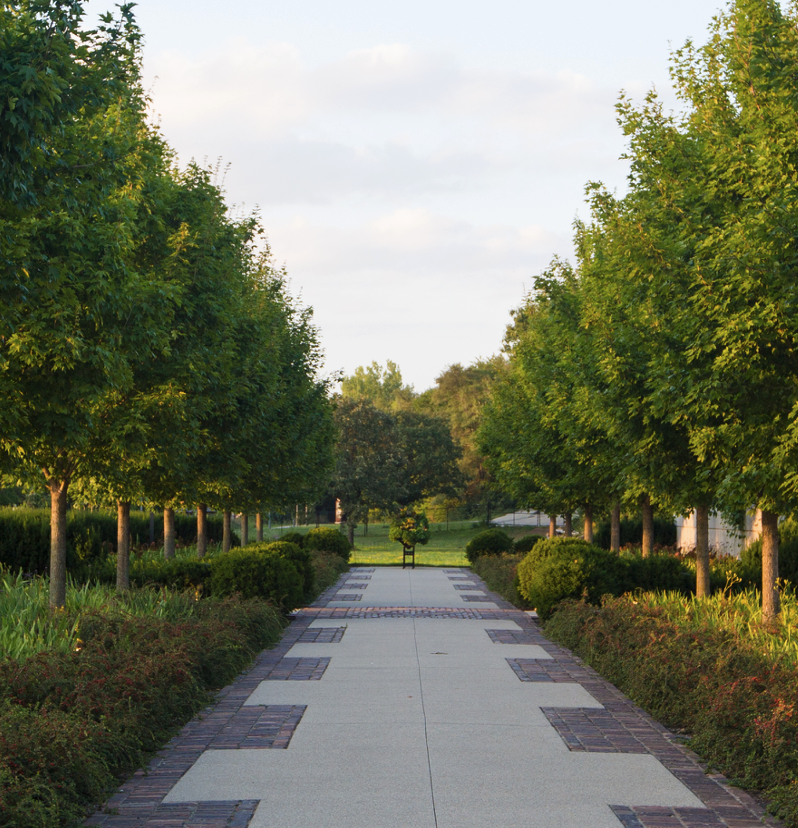
Summer is a wonderful time to see all the beauty the Botanical Garden has to offer. Rest assured that the plants we have on display are safe for you to enjoy. Birds will occasionally “plant” poison ivy in the Botanical Garden. Our horticulture staff and volunteers are always on the lookout for this plant, so it can be removed before any guests come in contact with it.
Poison ivy in hillside garden, July 2025 (below)

Ask Our Hort Team
If you see a plant that you are excited or concerned about, our horticulture team is here to answer your questions. You can find them at work all throughout the day, all throughout the facility. If you would feel more comfortable with an email, please direct it to hort@dmbotanicagarden.com. We’re happy to hear from you!
Natural Photo Hot Spot
Do you love to take pictures of nature? Feel free to wander around and capture what catches your interest. Looking to do a more formal shoot while everything is blooming? Please go to our website and make a reservation with our form here https://dmbotanicalgarden.com/photography-reservations/